

Reproductive coercion is a form of gender-based violence. It’s likely more common than we realise
- Written by The Conversation

From contraception access to safe abortion, there is growing awareness about reproductive health and rights.
Around the world, reproductive rights and justice are issues of political debate and on the electoral ballot. But for some, the greatest threat to their reproductive autonomy is being wielded by those closest to them.
Last week, preliminary findings were presented from the Australian Study of Health and Relationships on the prevalence of reproductive coercion and abuse nationally. This form of gender-based violence is where someone seeks to control another person’s reproductive choices using physical, sexual, and/or emotional violence or threats. The study included 4,540 participants aged 16–69 years.
Early analysis showed one in 20 reported experiencing controlling behaviours over contraception, pregnancy and abortion.
So what makes these controlling behaviours different from other forms of abuse? And how can we find out more?
What is it?
Reproductive coercion and abuse is mostly perpetrated against women, girls and LGBTQIA+ people, usually by a partner, parent or in-law.
Someone might do this by trying to coerce or force the other person to become pregnant or have an abortion. This can look like:
relentlessly pressuring the person to have a baby when they don’t want to
refusing to let them use birth control, or withholding or destroying it
harassing or stalking them to find out if they had an abortion.
The recent rapid review for government on approaches to prevent gender-based violence does not mention the words “reproductive coercion and abuse”. But it has been clearly identified in several domestic and family violence-related deaths in Australia.
These controlling behaviours intersect with domestic, family and sexual violence. However, reproductive coercion is unique, because it weaponises someone’s reproductive capacity in order to control them.

What we don’t know
The Australian Study of Health and Relationships is only undertaken every ten years and the latest survey is the first to estimate how common controlling another person’s reproductive rights might be on a national scale. The results of the survey provide essential data for sexual and reproductive health policies and programs across Australia.
However, there are no data for comparison yet to look for trends over time.
The reported one-in-20 prevalence is likely an underestimation. This is because we know people tend to under-report abuse and might not recognise or process what’s happening to them at the time, a typical trauma response.
And subtle emotional manipulation or pressure can be difficult to capture in broad population surveys.
Previous studies have conflated reproductive coercion and abuse with sexual violence or have failed to ask about abortion or the different types of relationships where this abuse occurs.
Any measure should be developed with people with lived experience and designed so communities like First Nations Australians, LGBTQIA+ people, people living with disability, migrants and refugees, and young people are properly represented. Too often they are not included in co-design processes or their experiences are made invisible by data gaps.
Last month, the report into Missing and murdered First Nations women and children revealed that Closing the Gap data on violence against women and children is out of date and the actual number of Indigenous women and children murdered or disappeared is unknown.
Last year’s Royal Commission into Violence, Abuse, Neglect and Exploitation of People with Disability similarly drew attention to the increased prevalence of abuse suffered by women with disability and the lack of proper consultation to involve them in solutions.
Our La Trobe and University of Melbourne team is developing a new rigorous measure to better capture the complex behaviours missed by other measures. It’s intended to compare reproductive coercion and abuse prevalence across different countries and strengthen how we measure the effect of future interventions.
Once developed, testing will start in maternal and child health settings. This is because the risk of abuse is heightened around childbirth and nurses and midwives are well positioned to safely identify and support patients.
Additional steps will be needed to determine what questions are best for health-care workers to ask to identify at-risk patients and respond – without putting them in more danger.
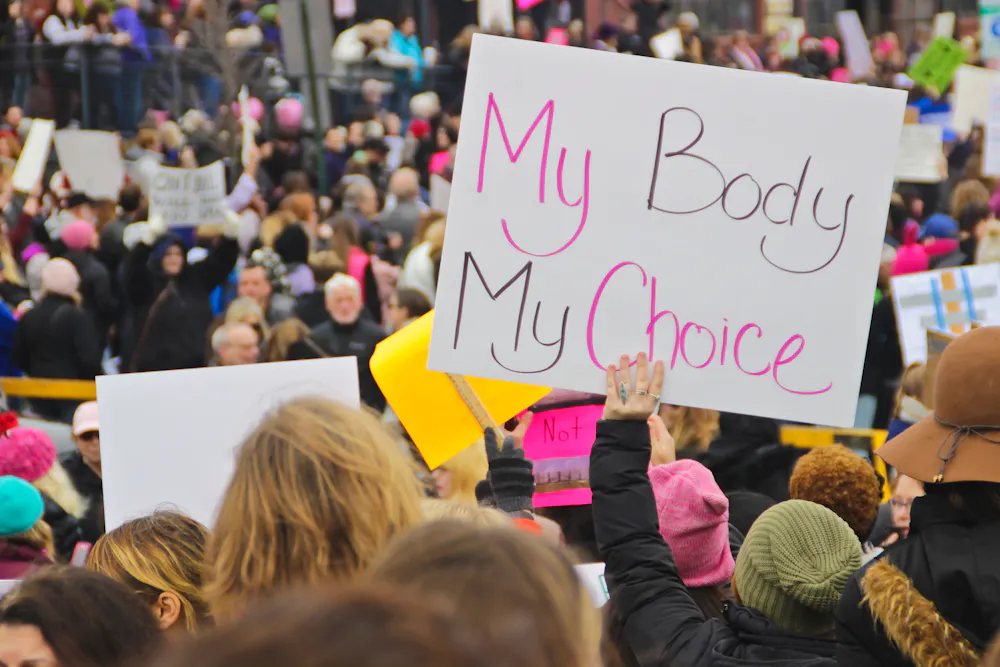 Coercion is happening within a global context – a fight for reproductive rights.
Benjamin Clapp/Shutterstock
Coercion is happening within a global context – a fight for reproductive rights.
Benjamin Clapp/Shutterstock
Where to from here? And where to get help
Reproductive coercion and abuse needs to have a larger focus in the current national discussion on gender-based violence and prevention.
A 2023 Senate inquiry into universal access to reproductive health care called for more research into reproductive coercion and abuse to inform guidelines and training for health-care workers. This will require better measurement of the full extent and patterns of the problem. We hope policy makers appropriately resource these areas critical to ending gender-based violence.
People experiencing reproductive coercion and abuse can contact 1800 My Options (VIC), Children by Choice (QLD) or 1800 Respect (National) for professional help.


