

Cheaper housing and better transport? What you need to know about Australia’s new National Urban Policy
- Written by The Conversation
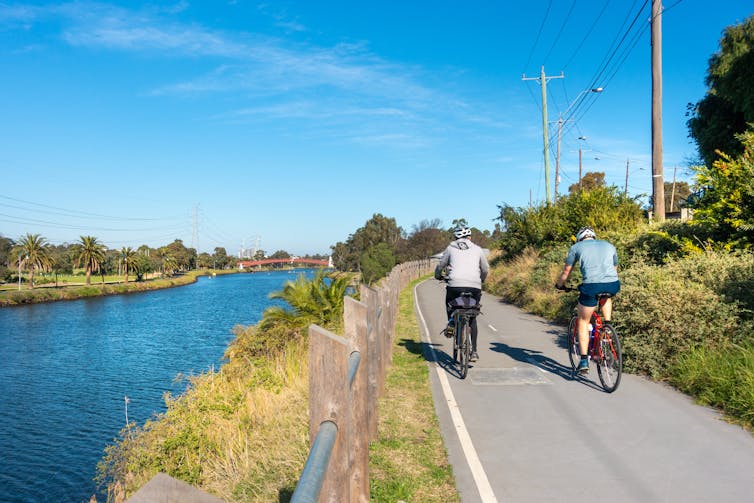
Imagine a city where everyone can afford a safe home, reach work or school without long, stressful commutes, and enjoy green parks and clean air.
This is Anthony Albanese’s decade-long vision for Australia’s cities after last week’s release of the new National Urban Policy (NUP).
As Transport and Infrastructure Minister in 2011, he introduced Our Cities, Our Future. Then in 2021, as opposition leader, he pledged a new urban framework.
The new NUP now sets the course for transforming Australia’s cities.
However, as our cities grow, so do the complexities they face: a housing crisis, locking out households, heavier traffic, and rising temperatures caused by climate changes.
These challenges can disproportionately affect low-income and vulnerable communities, especially in our outer suburbs.
The new NUP aims to address all of that, but the big question remains: does it go far enough to build the cities we need for the future?
What is the National Urban Policy?
This policy is Australia’s road map for sustainable city development. It guides collaboration between the federal government, states, territories and local communities to shape future cities to be liveable and productive.
The policy focuses on three key pillars:
1. Liveable and equitable cities: this is to ensure the basic human rights everyone should have access to, like affordable housing, public transport, and essential services like healthcare and education.
2. Productive and innovative cities: this will support jobs, industries and infrastructure to drive economic growth.
3. Sustainable and resilient cities: this will protect the environments in Australian cities to develop urban areas for climate change impacts like floods and heatwaves.
A key element of the policy is its commitment to ensuring strong collaboration with First Nations, Aboriginal and Indigenous communities, acknowledging their connection to the land and integrating their knowledge into urban planing of the future cities.
What does this policy mean for everyday people?
If the new policy delivers on its promise, here is how daily life could be affected for Australians.
Affordable housing: With the ambitious goal of delivering 1.2 million homes by 2029, the government aims to ease the housing crunch. More social housing and making homes closer to jobs and schools are top priorities.
Improved public transport: The government is planning to support public transport upgrades for faster, more reliable and greener commute choices like bike paths.

More green spaces: The government is also keen to boost Australians’ physical and mental health by providing more parks, shaded streets and green rooftops to reduce urban heat. This also aligns with broader climate, health, and wellbeing strategies, and includes heading towards net zero Australia.
Inclusive communities: Ensuring opportunities and services are available to everyone, including First Nations people, elders and those with disabilities, and providing job opportunities closer to home.
Can the policy address Australia’s critical challenges?
Our cities face enormous challenges and the new policy aims to tackle many of them (the housing crisis, climate issues and social inclusion).
But addressing them requires more than a list of goals – it demands bold actions and long-term commitments.
This is an area Western Sydney University has researched in its newly released report looking at international best practices in infrastructure funding.
It highlights how fragmented, short-term funding systems worsen these challenges.
It advocates for long-term, stable funding streams, collaboration, and community-driven approaches and principles successfully embedded in other countries.
The Organisation for Economic Co-operation and Development and United Nations Habitat’s Global State of National Policy report also provides a comprehensive overview of strategies used by other countries to tackle similar issues.
Other developed countries like Singapore, Canada, the United Kingdom and the United States have addressed many of the gaps we have noted through their approaches, including long-term funding models, coordination and clear sustainability goals.
Gaps in the new policy
While the new NUP sets a strong vision, it leaves several critical gaps:
Long-term funding is crucial: The policy leans heavily on short-term budgets and competitive grants, which prioritise projects based on competition, not community need. This leaves many communities and stakeholders with inadequate infrastructure.
An example of this is the short-term, limited support for modular and prefabricated systems as a solution to the housing crisis. A multi-decade funding commitment is essential to allow councils to plan effectively.
Collaboration across government levels is essential: The siloed approach between local councils and state governments impedes effective action. The Commonwealth must take a more proactive role in aligning projects and addressing fragmentation.
Clear timelines and accountability: When will these goals be achieved? The policy lacks clear deadlines and measurable targets to track progress. An ongoing evaluation framework is essential to ensure projects are executed efficiently and build trust among communities.
Embracing digital trasnformation: Many developed countries are using emerging technologies like digital twins and AI to improve their urban planning. Australia’s new policy could adopt similar approach to make smarter, data-driven decisions, though this is not clearly outlined in the current framework.
Infrastructure funding models need overhaul: Australia’s current infrastructure funding system is considered by some as fragmented, inconsistent and poorly coordinated, driven more by short-term political cycles than a by a long-term strategy. The NUP must address this critical gap.
Investment in green construction: The policy overlooks the role of financial institutions in driving sustainable urban development. Green mortgages, green bonds, and incentives for energy-efficient construction, like those in the UK and Europe, could help bridge the gap between affordability and sustainability while ensuring climate resilience in future housing strategies.
More support for vulnerable groups: While inclusivity is mentioned in the new policy, there is room for more specific strategies to support migrants, international students, refugees, single parent families and those from asylum-seeking backgrounds.
Overall, the new NUP is a positive and welcomed step forward.
For success, it must be shaped by meaningful collaboration between policymakers, planners, communities and researchers, drawing on global successes to ensure long-term impact. Only then can the government achieve its ambitious vision.


