

Mandatory minimum sentencing is proven to be bad policy. It won’t stop hate crimes
- Written by The Conversation
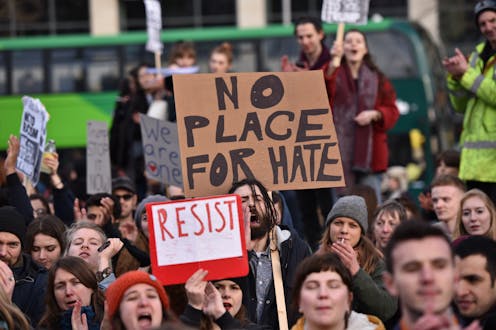
Weeks after Opposition Leader Peter Dutton announced his support for mandatory minimum jail terms for antisemitic offences, the government has legislated such laws. Minister for Home Affairs Tony Burke stated the federal parliament would now be “putting in place the toughest laws against hate speech that Australia has ever had”.
It follows a concerning recent spate of antisemitic attacks in Australia, including on Jewish places of worship, schools, businesses and homes.
Last week, a caravan was found on the outskirts of Sydney, filled with explosives and a list of Jewish targets.
Understandably, there is fear in the Jewish community.
The government’s decision to pursue mandatory minimum sentencing is contrary the 2023 ALP National Policy Platform stating:
Labor opposes mandatory sentencing. This practice does not reduce crime but does undermine the independence of the judiciary, leads to unjust outcomes, and is often discriminatory in practice.
The evidence shows that Labor’s official policy platform is correct. Mandatory minimum sentencing is unlikely to help solve this issue – or any other issue for that matter. It has a poor track record of reducing crime.
What is mandatory sentencing?
Australian criminal laws usually set a maximum penalty for an offence. It is then the role of the courts (a judge or magistrate) to set the sentence, up to the maximum penalty.
This allows the judiciary to exercise discretion in sentencing. It means the courts can take into account a range of relevant factors when determining an appropriate sentence, guided by the sentencing laws in each jurisdiction.
However, laws that demand a mandatory sentence set a minimum penalty for an offence, thereby significantly reducing the role of judicial discretion.

Let’s imagine two people are appearing in court, to be sentenced for exactly the same offence.
Defendant A (Kate) is 18 years old and has pleaded guilty. It is her first offence. She is Aboriginal, a victim of childhood domestic violence and lives on the streets. She has recently started to get help for her mental health problems.
Defendant B (Jim) is 35. He has a long criminal history, including breaches of bail and parole. He has never been out of prison for more than six months at a time. He has pleaded not guilty and doesn’t think he has done anything wrong.
The maximum penalty for this offence is five years. Under standard sentencing laws, a judge would usually give different sentences to Kate and Jim, based on their personal circumstances and future prospects. Jim would generally get a more severe sentence than Kate.
Now, let’s imagine parliament decides to set a mandatory minimum sentence of two years in prison. This means the judge has to send both Kate and Jim to prison for at least two years, despite the differences between them, even if a community-based sentence might be more appropriate for Kate.
So do mandatory minimum sentences work?
The main arguments for mandatory sentences are that they:
reflect community standards
provide consistency
avoid judicial leniency, and
reduce crime.
The evidence for each of these is weak.
A study with members of the Victorian public who had served on juries found strong support for sentencing discretion.
This is confirmed by recent research from the Queensland Law Reform Commission. It found general support from the public for individualised responses, not an inflexible approach to sentencing.
Mandatory sentencing yields more consistent outcomes, but denies flexibility in cases where defendants should be treated differently.
The argument that mandatory sentencing reduces crime is also contested.
Study after study has shown that harsher penalties do not reduce crime.
It is uncontested, however, that certainty of detection (whether you’ll get caught) is the primary deterrent factor, not the severity of the sentence (assuming that the perpetrator is aware of it).
Mandatory sentencing also brings risks
Let’s review the arguments against mandatory sentencing.
Firstly, it undermines judicial independence, the separation of powers (between the courts and executive government) and the rule of law: a concept based on fairness in the judicial system.
Mandatory sentencing also shifts discretion to other, less transparent, parts of the criminal justice system (for example, police and prosecution services), as they frame the charges that will bring defendants to court in the first place.
Secondly, a guilty plea is a mitigating factor the court considers when sentencing. Mandatory sentencing means there is little incentive for defendants to plead guilty. This increases workloads, delays, costs, and has consequent negative effects for victims.
In addition, juries may be reluctant to convict if they know the minimum sentence will insist upon a prison term. This can lead to inappropriate not guilty verdicts.
Undermining the right to a fair trial
Australia has previously come under fire from the United Nations for its mandatory sentencing laws.
These requirements are found in the International Covenant on Civil and Political Rights, which entered into force for Australia in 1980.
Indeed, the Law Council of Australia has suggested mandatory sentencing is inconsistent with the international prohibition against arbitrary detention, and undermines the right to a fair trial, given that such sentences have been somewhat predetermined.
These laws can also lead to injustice. As the example above shows, mandatory sentencing can impact disproportionately on vulnerable people, such as Indigenous people, and women with disabilities.
These cohorts are already far more vulnerable than non-Indigenous men (who account for most people who offend).
Adverse effects on imprisonment rates
The High Court recently stated that the mandatory minimum sentence will have the effect of lifting sentencing levels generally.
But the research shows longer prison sentences are much more expensive and less effective than community-based sentencing options in reducing crime.
Let’s leave the final word on this subject with the Law Council of Australia:
achieving a just outcome in the particular circumstances of a case, while maintaining consistency across similar cases and with Australia’s human rights obligations, is […] paramount.
We need effective responses to all forms of racial and religious hatred, including antisemitic hate crimes, but populist, knee-jerk reactions are highly unlikely to make the community safer. Clear-headed thinking will best stand the test of time, not policy developed in anger or fear.


