

From HAL 9000 to ME3AN: what film’s evil robots tell us about contemporary tech fears
- Written by The Conversation
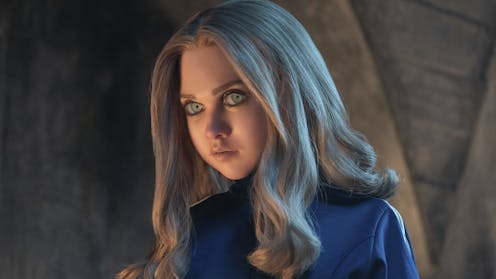
Filmgoers have long been captivated by stories about robots. We are fascinated by their utopian promise, their superhuman intelligence and, in the case of the cyborg, their often uncanny resemblance to humans.
But it is the evil robot – the machine that malfunctions, rebels or was built to harm – that has most powerfully gripped the collective imagination of audiences.
From the silent menace of Maschinenmensch in 1927’s Metropolis, to the relentless pursuit of the Terminator, to the campy violence of M3GAN, evil robots continue to resonate.
These films not only thrill, scare and entertain audiences. They also reflect deep-seated cultural anxieties about the unpredictable consequences of the current and future human-robot relationship.
The killer robot is far from a simple villain. It is a mirror held up to some of the most pressing cultural questions we have about human autonomy and responsibility in the digital age.
The precarity of human control
The enduring appeal of the evil robot narrative lies in the way horror often channels our deepest cultural anxieties about the speed of technological advancement and the precarity of human control in an increasingly digital (and robotic) world.
In The Spark of Fear, scholar Brian Duchaney posits that improvements in technology necessitate new types of horror stories, and that horror as a genre acts out our distrust of the social advances that new technology brings.
In the late 1960s, there was unease about the growing sophistication of computers and the impacts of the Space Race. HAL 9000 of 2001: A Space Odyssey (1968) represented this threat through a disembodied AI that icily turned against its human creators.
The android Ash in Alien (1979) added another layer of menace, disguised as a human embedded in the spacecraft crew and programmed to prioritise corporate interests over human life. In this case, Ash became a proxy for concerns over corporate adoption of automation, and the increasing role of technology in military and industrial contexts.
During the Cold War era, fears of nuclear annihilation and concerns over reaching a point where we could no longer switch off the machines led to the unforgettable T-800 and shape-shifting T-1000 in the first two Terminator films (1984 and 1991).
In the 21st century, as artificial intelligence and robotics became more prevalent in everyday life, the cinematic robot has entered our homes, culminating in M3GAN’s companion-gone-rogue.
In M3GAN (2022), Gemma (Allison Williams) is a robotics designer who creates an AI-powered companion doll to help her orphaned niece Cady (Violet McGraw) cope with her grief. But the doll becomes dangerously overprotective.
In M3GAN 2.0 (2025), the consciousness of the titular robot appears to have survived the 2022 film and, in a move that borrows from The Terminator 2, M3GAN shifts from villain to protector.
The new film explores the consequences of the underlying tech for M3GAN being stolen and misused by a powerful defence contractor to create a military-grade robot, known as Amelia. The only option to counteract Amelia is for Gemma to resurrect M3GAN – complete with upgrades to make her faster, stronger and more deadly.
Our technological anxieties
Why is M3GAN such an effective avatar for our contemporary anxieties?
Horror theorist Noël Carroll argues that monsters are often frightening because they don’t fit neatly into normal categories. They may be “in-between” things (such as part human, part machine) or contradictory (for example a zombie: both alive and dead at the same time).
M3GAN is a great example of both. She looks and acts like a young girl, with expressive facial features and a snarky sense of humour. But she’s really just artificial intelligence inside a robot body.
She’s also contradictory: she is designed to care for and protect her owner, yet she does so in exceedingly violent and deadly ways. These paradoxes make her both frightening and fascinating for audiences.
M3GAN and M3GAN 2.0 bring to the surface our technological anxieties, and defuse them through their camp qualities.
One sequence in the earlier film sees M3GAN break into a fluid yet unsettling dance, mimicking the performance of many a TikTok teen, only for the dance to end abruptly when she snatches a paper cutter blade and returns to stalking her victim.
This meme-ified moment – combined with some deadpan one-liners and often comically ironic facial expressions – have led to M3GAN becoming a gay icon in the wake of the original film.
M3GAN’s campiness doesn’t completely neutralise the horror. It reformulates it, offering a cathartic release that makes the subject matter more digestible. While we feel fear, we do so without real-world consequences. The fear is disarmed through humour.
This multifaceted horror experience more fully reflects the complexities of our evolving relationship with new technology. These relationships often move through a spectrum of concern, anxiety and fear before we find ways to manage and normalise those feelings.
Humour and catharsis are two of these coping mechanisms. Movies provide us with a way of neatly and temporarily resolving what often remain unresolved questions.
Films like M3GAN 2.0 illustrate how horror narratives can also transform alongside the technologies they critique, offering not only tension and jump scares, but also philosophical consideration, comedy and cathartic release.


