

Interest rates are on hold at 3.85%, as the Reserve Bank opts for caution over mortgage relief
- Written by The Conversation
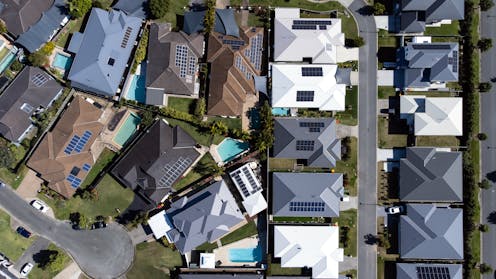
The Reserve Bank of Australia has kept the cash rate at 3.85%, after cutting it in February and May.
Those earlier moves were aimed at supporting the economy as growth slowed and inflation eased. This time, however, the bank chose to pause, signalling a more cautious stance.
The decision will be hard for the millions of mortgage holders and aspiring home owners who were hoping for a cut.
But as the bank’s monetary policy board explained:
the board judged that it could wait for a little more information to confirm that inflation remains on track to reach 2.5% on a sustainable basis.
The decision surprised many. Financial markets had priced in a 90% chance of a rate cut and the big four banks – ANZ, Westpac, Commonwealth and NAB – had forecast an easing in July.
On Tuesday afternoon Treasurer Jim Chalmers, would not be drawn on whether the bank had made the right decision but did say:
it was not the result millions of Australians were hoping for or what the market was expecting.
By holding steady, the bank is signalling it is not yet fully convinced inflation is returning to target and is prepared to wait for further evidence before cutting again.
The bank also cautioned that uncertainty in the world economy remains elevated, with the final scope of trade tariffs yet to play out.
What’s behind this surprise decision?
The economy grew just 0.2% in the March quarter, with annual growth slowing to 1.3%. This was well below trend and even weaker than the 0.6% pace recorded in the December quarter. The data points to a clear loss of momentum.
Consumer spending has also remained soft. Retail sales rose only 0.2% in May, following flat or falling results in the two previous months.
Food spending declined, and sales of household goods were unchanged. Many households are still feeling the squeeze from high interest rates, rising living costs, and low confidence in the economy.
Inflation has continued to ease. May’s inflation figures showed headline inflation falling to 2.1%, while the Reserve Bank’s preferred trimmed mean – dropped to 2.4% – the lowest since late 2021.
The trimmed mean is a measure of underlying inflation that excludes the most extreme price changes (both increases and decreases) in the consumer price index basket to give a clearer picture of inflation trends.
Price pressures have eased across both goods and services, with no signs of wage-driven or second-round inflation taking hold.
Despite this, the bank decided to pause. While inflation is generally in line with its forecasts, the bank noted:
the June quarter CPI [consumer price index] figures were slightly stronger than expected at the margin.
With rates already cut twice this year and broader economic conditions evolving as expected, the Reserve Bank judged it could wait for more data before making its next move.
What happens next?
Markets still expect two more cuts this year – in August and November – which would bring the cash rate down to 3.35% by the end of 2025. But this depends on how inflation, wages and the job market evolve.
Wage growth is slowing. Private sector wages rose 3.3% over the year to March, the slowest pace since mid-2022.
The unemployment rate stayed at 4.1% in May, with little change in how many people are working or looking for jobs. The job market is still solid, but signs of slowing are emerging.
The Reserve Bank is likely to move carefully. While inflation pressures have eased, the board wants to be sure prices stay within its 2 to 3% target band. It’s also keeping an eye on the housing market. Home prices rose 0.4% in June and are now up 4.6% over the year.
That renewed strength, helped by earlier rate cuts and limited supply, could make future decisions more complicated.
Global conditions still matter
As the monetary policy board noted, “uncertainty in the world economy remains elevated”. Slowing global growth and fragile trade conditions are adding to the complexity of the bank’s task.
In Europe, economic growth is expected to reach just 0.9% this year, well below historical norms.
China’s recovery also remains uneven, despite authorities targeting 5% growth. Weak private investment and ongoing challenges in the property sector continue to weigh on momentum.
Meanwhile, global trade has stalled. The World Trade Organization expects trade volumes to fall 0.2% this year as tensions and tariffs continue to disrupt supply chains. Ongoing trade threats between the United States and China are also hurting investment and weighing on key Australian exports like resources and education.
Tuesday’s decision to hold the cash rate steady highlights the Reserve Bank’s cautious approach in a shifting economic environment.
Growth is soft, inflation has eased back within the target band, and household spending remains under pressure. But with inflation data slightly stronger than expected, the bank is choosing to wait for more confirmation before cutting again.
This isn’t a change in direction – it’s a pause for more information. The message remains clear: the Reserve Bank is prepared to act, but only when the data warrant it.


