

Reform of NZ’s protected lands is overdue – but the public should decide about economic activities
- Written by The Conversation
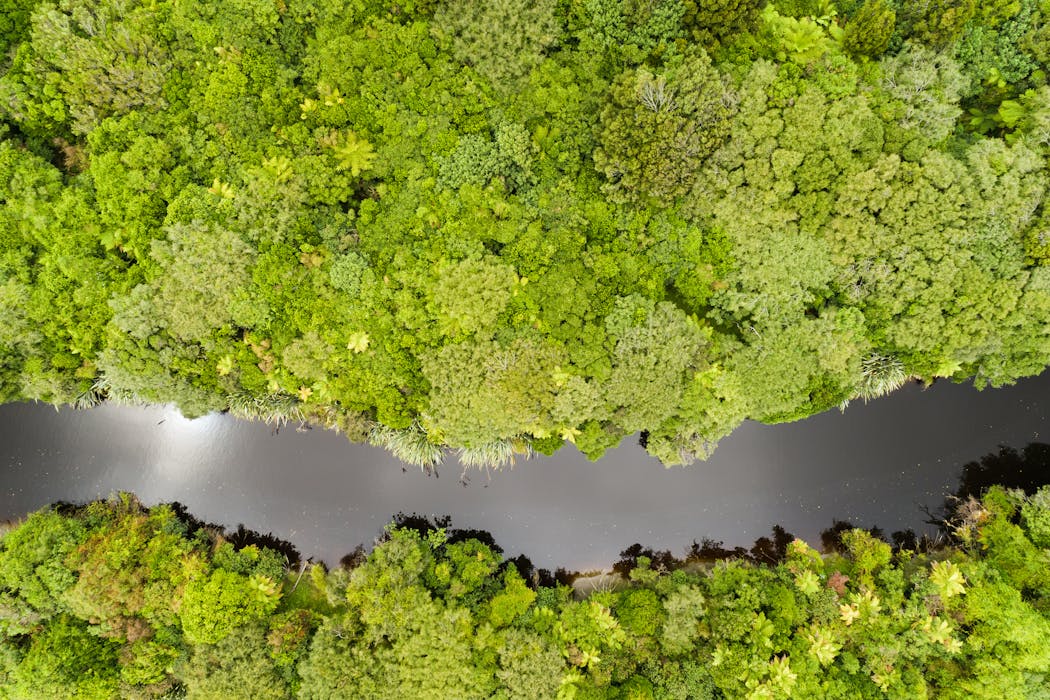
The government’s proposed reforms of the rules governing public conservation land aim to dismantle any potential obstacle to “unleashing economic growth” in protected areas.
Currently, about a third of New Zealand’s land is under protection. This ranges from national parks (11.6%) to stewardship areas (9.4%) and conservation parks (5.7%). Twelve other designations make up the rest.
Some commercial activities are permitted – including guided walks, aircraft-based sightseeing, ski fields and animal grazing – and approved by the Department of Conservation as “concessions”.
The proposed changes to the Conservation Act include a review of land designation. The government could delist or swap up to 60% of the current area under protection.
Conservation Minister Tama Potaka said he can’t indicate which designations or locations would be delisted. Nor can he say what percentage of conservation lands would be affected – and where – because changes will be driven by demand for land.
The minister only committed to leaving untouched the designations that are difficult to change: national parks, wilderness areas, reserves and world heritage sites.
The question of whether more economic benefits can be obtained from protected areas is legitimate. New Zealand does need a radical reform of its conservation areas and legislation. There is potential for better social and economic outcomes.
But the proposal consolidates ministerial discretion to unprecedented levels and the government follows a misguided fast-track approach to permitting economic activities such as mining. This could take native biodiversity into dangerous territory.
Outdated conservation laws
New Zealand holds tight to an outdated approach known as “fortress conservation”. This limits commercial opportunities to specific areas, mostly concentrated around established facilities (roads, hotels) and the edges of designated lands. Even when regulating other activities such as energy generation or agriculture, the idea has been to “sacrifice” some spaces and keep as much land as possible “locked up”.
A key reason was that people didn’t know enough about the ecological values of the land. As a proxy, lawmakers relied on the subjective concepts of wilderness values and intrinsic values to justify strict protections over most lands.
Insufficient scientific input meant authorities have relied on “ecologically blind” zoning frameworks, such as a planning tool known as the recreation opportunity spectrum. This divides lands according to recreational opportunities and visitor needs.
But there is a better path forward – one that allows public decision making and honours international commitments, while achieving better ecological and economic benefits.
Towards regulations informed by science
This alternative approach is grounded in three key principles.
First, it uses gap analysis to identify which ecosystems and species are underprotected.
Second, it relies on regulations shaped by ecological knowledge and conservation priorities.
Third, it applies the principles of proportionality and precaution, meaning that regulatory responses should match the severity, reversibility and likelihood of environmental harm. Currently, New Zealand’s regulatory framework does not reflect this.
New Zealand has signed the Kunming-Montreal Global Biodiversity Framework. This means at least 30% of conservation lands must be representative of most, if not all, native ecosystems by 2030.
At present, coastal, lowland and dryland ecosystems are under-represented. In contrast, alpine and montane environments, are represented way above the recommended threshold (20% of the remaining cover for that ecosystem).
If up to 60% of conservation lands were to be swapped or delisted without prioritising representativeness, vulnerability and rarity, the ecological losses may be immense and irreversible.
Rethinking protection categories
My research develops a broader reform approach. It also reflects growing international consensus on the need for science-informed conservation planning.
I argue New Zealand should set up region-specific and nationwide fora, such as citizen assemblies or consensus conferences. Conversations should focus on specific topics, informed by scientists and iwi.
Vulnerable or under-represented ecosystems currently require stronger protection. Deliberations should indicate which activities should be limited or excluded to better protect such areas.
We must also consider vulnerability to climate change. Scientists expect that ecosystems may migrate outside protected areas.
Consensus should be built around what qualifies as a “significantly over-represented” native ecosystem. Where ecosystems are already well protected and resilient, the public should discuss whether re-designation, land exchanges or even disposals may be appropriate.
If lands are retained, consensus should be sought on the economic uses that can maintain ecological health. If the public doesn’t support land delisting or swaps, alternative strategies must be developed to improve ecological representativeness. Sustainable funding mechanisms should also be identified to support these efforts.
The Department of Conservation should work with independent scientists and iwi to develop a new zoning framework to guide commercial concessions and recreational access. This framework should capture the principles highlighted above.
When applied to each area, it should also enable the mapping of the ecological values feasible to protect. This would help select bespoke regulatory options. In turn, it would balance biodiversity and economic outcomes for each context.
Guidance for these steps should be incorporated in a new national strategy, aligned with domestic goals such as the biodiversity strategy and international commitments.
New Zealand has the expertise for smart reforms. New Zealanders have the passion for nature and patience required to engage in deliberations. But will politicians have the wisdom to avoid a totally unnecessary mutilation of conservation lands, for undefined biodiversity gains?


