

What will happen to the Louvre jewellery after the heist? There are two likely scenarios
- Written by The Conversation
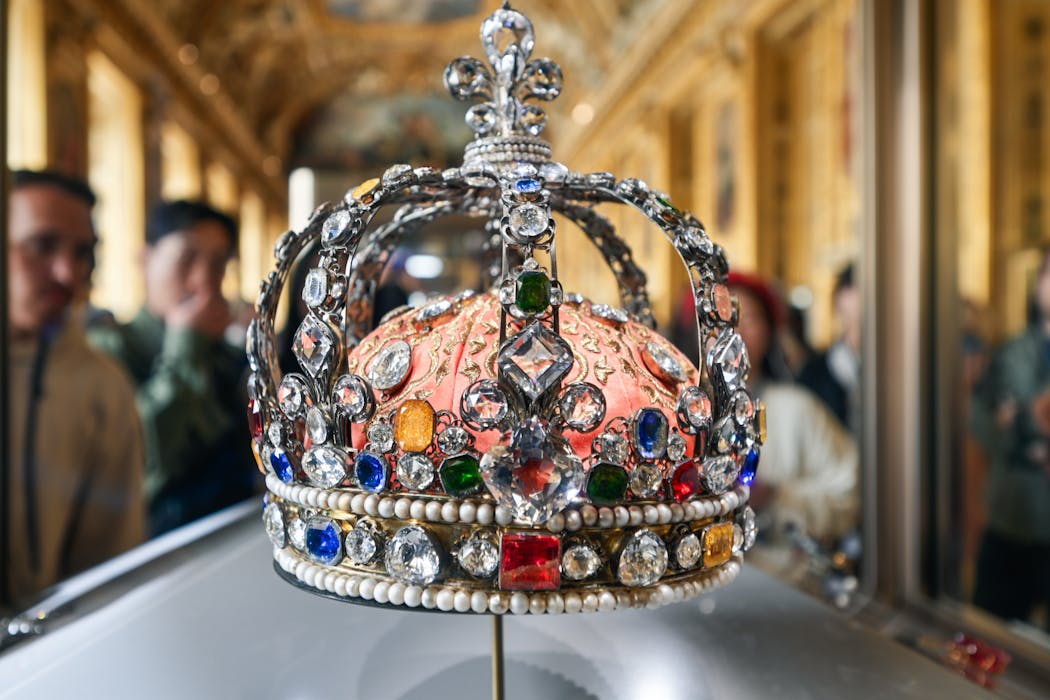
The spectacular heist of jewellery from the Louvre museum in Paris has many people wondering how a theft like this could occur in broad daylight and what might happen to the items that were stolen from the museum.
In a matter of minutes, four thieves were able to enter through a first-floor window, break into secure glass displays, and take nine items of jewellery of immeasurable value.
Although an alarm was set off and museum guards were nearby, the thieves were able to escape quickly, using motor bikes to get away. They dropped one stolen item, a diamond and emerald-encrusted royal crown that had belonged to Empress Eugénie, Napoleon III’s wife.
Their loot include jewellery from French imperial times – brooches, necklaces, earrings and a tiara. The French prosecutor’s office said the jewels were worth some 88 million euros (A$157 million), not including their historical value.
The speed and professionalism of the heist shows this was a well-planned crime, carried out by highly skilled perpetrators. That suggests they are linked to organised criminal groups.
Several media outlets reported a number of smaller thefts from French museums in recent weeks, including gold nuggets from the Paris Natural History Museum. There is no suggestion these thefts were linked to the Louvre heist.
What might happen to the loot?
The stolen jewellery includes well-known pieces that are easily recognisable. This will make it difficult, if not impossible, to sell them on the black market, even to well-heeled collectors and buyers.
This problem is well-known from other museum heists – such as the theft of the Canadian “Big Maple Leaf” giant gold coin from Berlin’s Bode Museum in 2017 or the famous heist of 13 masterpieces by Degas, Manet and Rembrandt from the Isabella Stewart Gardner Museum in Boston in 1990. Those paintings have never been recovered.

Instead, most experts believe one of two scenarios are more likely.
In the first, the jewellery would be broken down into smaller pieces. Diamonds and other gemstones may be taken out, altered and then offered for sale. Silver and gold may be used to manufacture other pieces or may be sold separately.
This scenario would make it easy to conceal the origin of the pieces and sell them openly or online. The combined value, however, would be significantly lower compared to leaving the pieces intact. It is thus doubtful the thieves targeted the specific jewellery for this purpose.
Scenario two would involve the thieves, or more likely the masterminds behind them, trying to sell the pieces back to the Louvre or trying to extort money from the French government for their return.
This may be done through brokers or other middlemen and may not happen for a while, until there is less public and media attention and the perpetrators feel sufficiently safe to contact – directly or indirectly – museum or state authorities.
Given the historical significance of the pieces coupled with the embarrassment caused by the heist, the Louvre and the French government would be keen to have the pieces returned as swiftly as possible and might be willing to negotiate, albeit secretively.
Much of this remains, however, speculation. Only a few days have passed since the heist occurred and many questions about the events, perpetrators and their motives remain unanswered. And just who may be behind this spectacular heist from France’s largest museum has everyone guessing.
Similarities with a Dresden museum heist
The Louvre theft brings to mind the jewellery heist at the Green Vault at the Zwinger Palace in Dresden, Germany, in 2019.
In this case, the perpetrators had closely examined the museum’s security system for many days and were able to enter the building without being caught on camera. They entered through a window on the first floor and within minutes stole 21 pieces of jewellery from several displays.
Unlike the Paris heist, the Dresden thieves entered at night and used brute force to damage the displays to take their loot.

Some years after the robbery, German authorities were able to identify and arrest the thieves involved in the heist – all five were members of a notorious Berlin-based crime family.
The perpetrators have since been tried and convicted and are serving long jail times. Most of the jewellery was retrieved and returned – unaltered – to its famous home.
It is hoped the French authorities will soon be similarly successful.


