

Pornography, the devil and baboons in fancy dress: what went on at the infamous historical Hellfire Club
- Written by The Conversation

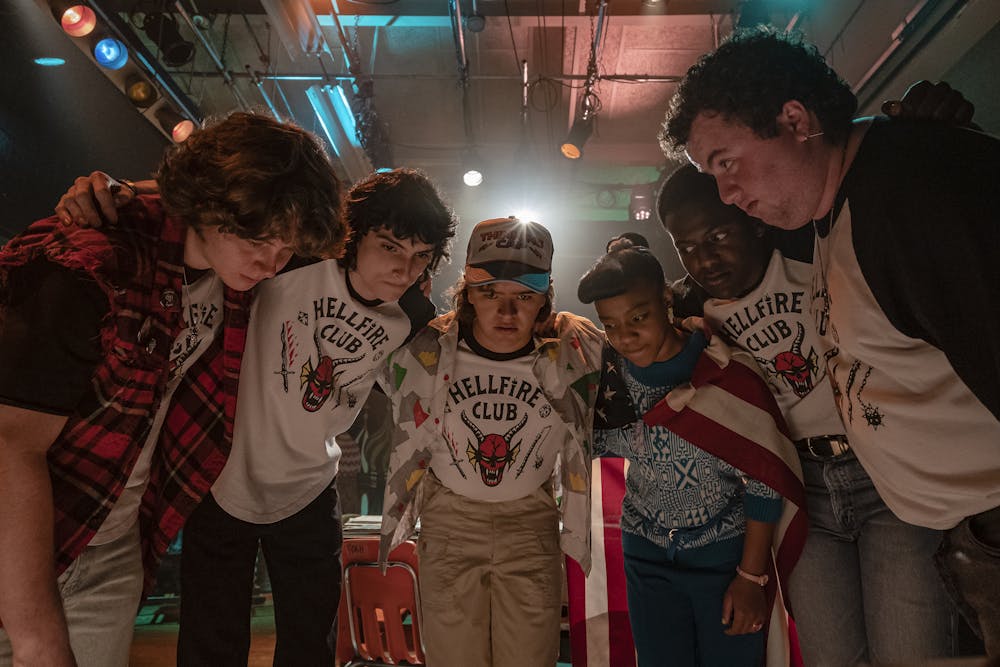
After a month of waiting, the season finale of Stranger Things season 4 has almost arrived on Netflix. This season, along with the nightmarish arch-villain Vecna, we have been introduced to “the Hellfire Club” – the Dungeons and Dragons club of Hawkins high school.
The club is primarily made up of the school’s “losers” and outcasts – none of whom could have anticipated being framed by their small town as an evil cult responsible for the murders taking place.
While the fate of the Hawkins Hellfire leader and members still hangs in the balance, we can look to its origins in history – the Hellfire Club of the 18th century – for clues of what to expect in this finale.
The OG Hellfire Club
Phillip, Duke of Wharton, founded the first official Hellfire Club in 1718. The club was primarily a parodic take on the popular trend of gentleman clubs across London at the time – admission was open to both men and women.
However, rather than meeting to discuss poetry and politics, the main aim of the Hellfire Club was to mock religion and its inherent hypocrisies – the club leader was called “The Devil” and members were encouraged to come dressed as biblical characters. As well as partaking in satirical religious ceremonies, the club would enjoy festive meals of Holy Ghost Pie, Breast of Venus, and Devil’s Loin.
The notorious Hellfire Club
While Wharton’s club was reluctantly disbanded in 1721, it would go on to be replaced by the most notorious Hellfire Club in history.
Indeed, the Hellfire Club is often synonymous with Sir Francis Dashwood’s club. This club was originally named the Order of the Friars of St Francis of Wycombe, and the members known as “the monks” - however, that it not the name that history would remember it by. Dashwood was himself a scandalous figure, known as a man with a true “genius for obscenity.” His love for promiscuity was matched with his flair for the dramatic.
In 1751, Dashwood leased the remarkable Medmenham Abbey and had this medieval ruin entirely renovated in Gothic style for the purpose of this club. Written into a stained glass window on the doorway was the club’s motto, “Fais ce que tu voudras” — Do what thou wilt.
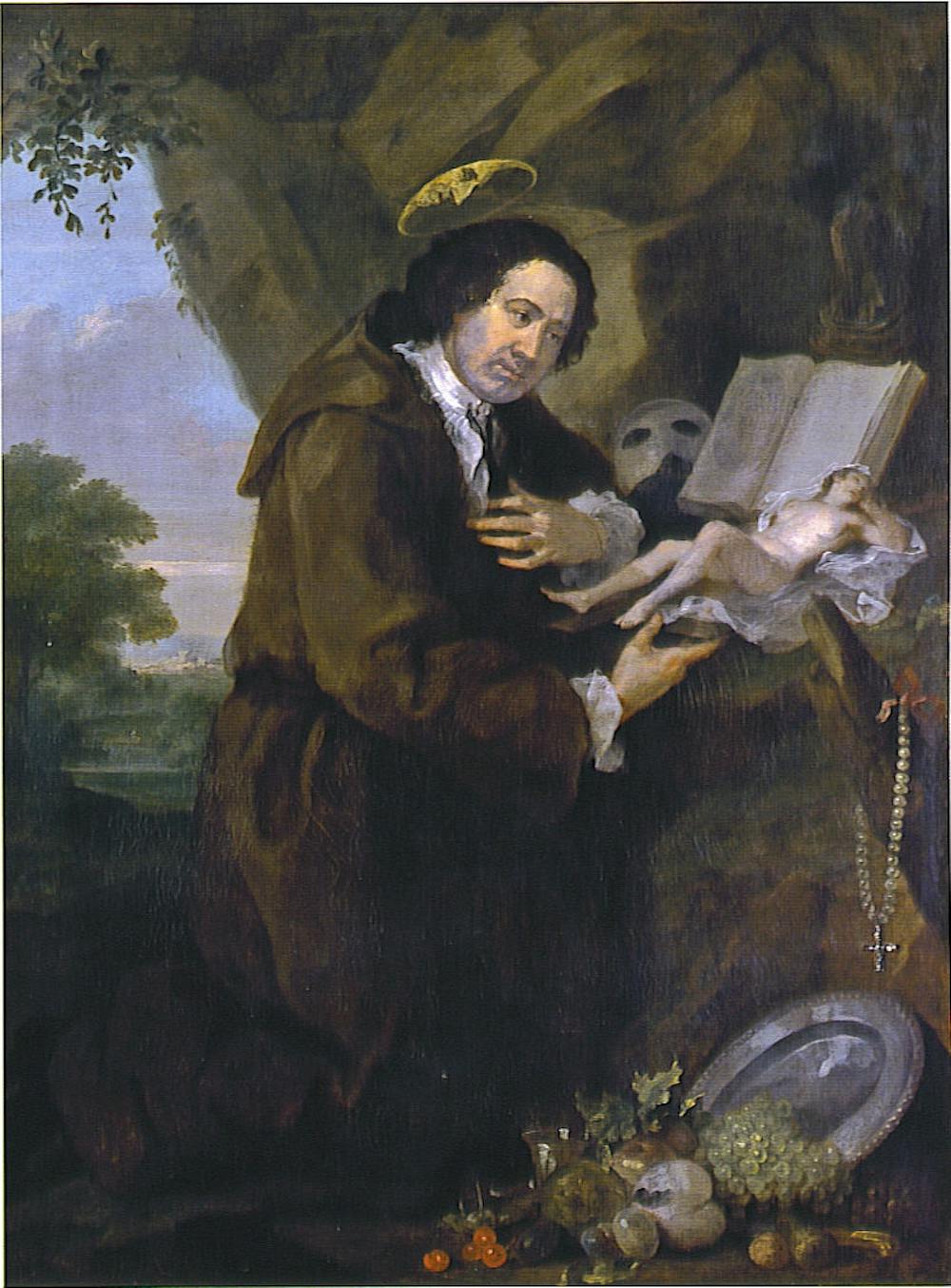 Portrait of Francis Dashwood by William Hogarth from the late 1750s, parodying Renaissance images of Francis of Assisi. The Bible has been replaced by a copy of the erotic novel Elegantiae Latini sermonis, and the profile of Dashwood’s friend Lord Sandwich peers from the halo.
Wikimedia
Artwork by William Hogarth is believed to have once decorated the walls, depicting club members in a range of erotic activities. The library was stocked with the most infamous pornographic works of the time, such as John Cleland’s Memoirs of a Woman of Pleasure (1749).
Club members consisted of some of the most influential figures of the time: including Thomas Potter, John Wilkes, John Montagu, William Hogarth, George Dodington, Benjamin Bates II, and many more. Even Benjamin Franklin is thought to have been a member, as he is recorded to have stayed at Medmenham Abbey at the time a meeting was taking place – a privilege only allowed to Hellfire members.
What happened at the Hellfire Club?
The club met only twice a year, with an AGM which lasted more than a week in September or June. Each member encouraged to bring female guests of “a cheerful, lively disposition.”
As written in Nocturnal Revels (1779), a book which claimed to have been authored by one of these “monk[s] of the Order of St Francis,”
no vows of celibacy were required either by the ladies or the Monks, the former considering themselves as the lawful wives of the brethren during their stay within the monastic walls, every Monk being religiously scrupulous not to infringe upon the nuptial alliance of any other brother.
Under the cover of darkness, adorned in masks and cloaks, the club members would make their way across the river Thames in gondolas to the Abbey. They were greeted with a concoction made of brandy and brimstone and would drink to the Gods of Darkness. The group kept the same parodic religious rituals which had been performed by Wharton’s group.
As Horace Walpole, an English writer of the time, describes,
the members’ practice was rigorously pagan: Bacchus and Venus were the deities to whom they almost publicly sacrificed; and the nymphs and the hogsheads that were laid in against the festivals of this new church, sufficiently informed the neighborhood of the complexion of those hermits.
Throughout the night, they would gradually make their way through the Abbey – and the activities reportedly became more and more obscene. One reported (if unconfirmed) story goes that a baboon dressed as a devil was once in attendance, and gave John Wilkes such a fright when it was released from a chest that he begged the devil to spare him and proclaimed he was “but half a sinner”.
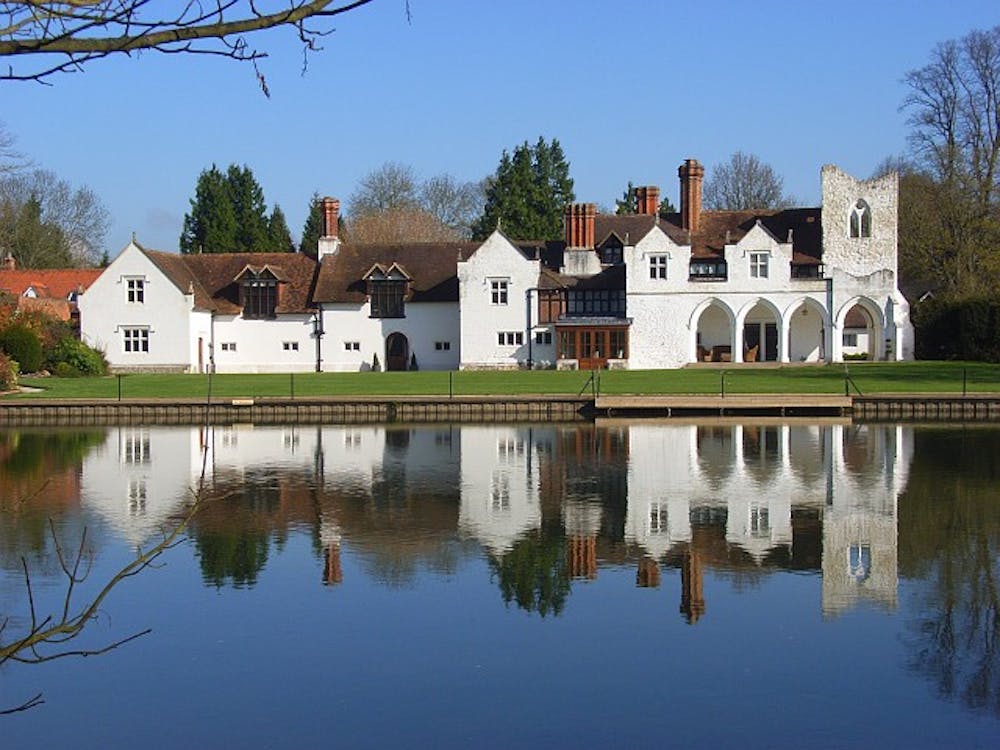 Medmenham Abbey. The mansion was built in 1595 on the site of a Cistercian abbey. To the right are the ruined folly tower and cloister that were added in 1755 for Sir Francis Dashwood.
Wikimedia
Notoriety and the underground
In 1760, a publication appeared (Chrysal, or the Adventures of a Guinea) which made the Hellfire Club’s activities known to the general public – identifying Medmenham Abbey and even making reference to this infamous baboon story. Rumours had spread about the activities of the club, and while few had access particulars, the general perception was that it was a blasphemous and bawdy club that partook in sinful, libertine behaviour.
It is believed the tourists would flock around the island to try and catch a glimpse of this notorious club, made up of such prominent members. It was around this time that Dashwood moved the club activities underground (literally) into a series of elaborate caves and tunnels built under Dashwood’s garden at West Wycombe.
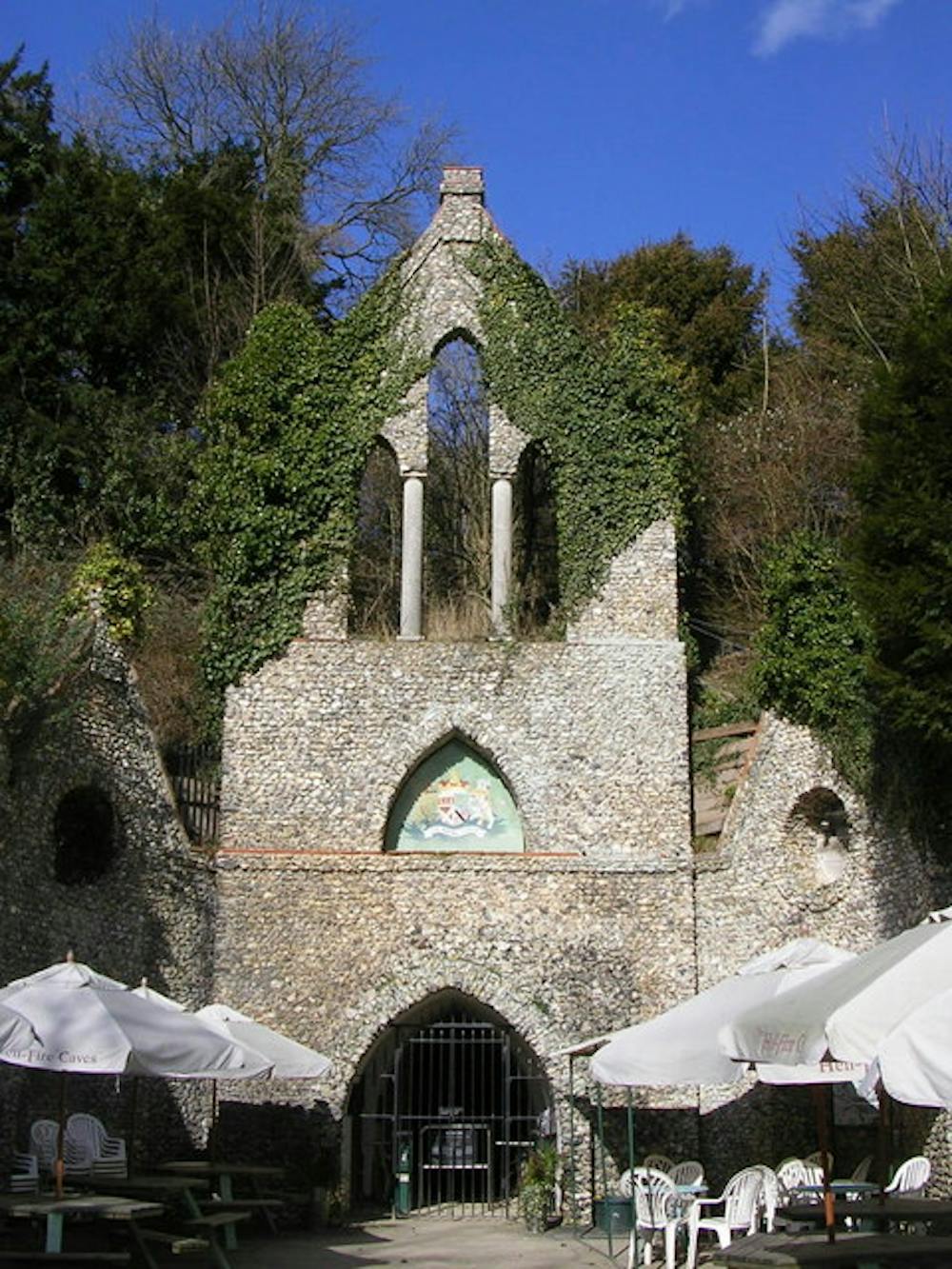 The Hellfire Caves (also known as the West Wycombe Caves) are a network of man-made chalk and flint caverns which extend 260m underground. They were excavated between 1748 and 1752 for Francis Dashwood, founder of the Society of Dilettanti and co-founder of the Hellfire Club, whose meetings were held in the caves.
Wikimedia
Farewell Hellfire Club
The club was finally abandoned in 1766. Records and reports of membership to this Hellfire Club were used to bring about the political ruin of many of its members — a witch-hunt which bears reflection within Stranger Things own Hellfire Club.
While Dashwood and Franklin faced a baboon rather than Vecna, we can draw some comparisons from this historical example. Both clubs were formed by figures disillusioned by polite society, and were met with outrage from the society they so condemned. And, ultimately, this condemnation was stronger.


