

Another war in the Horn of Africa would be disastrous for one of the world’s most repressive nations
- Written by The Conversation
The geopolitical temperature is rising in the Red Sea.
Ethiopia is threatening Eritrea, its diminutive neighbour, making a claim on the Eritrean port of Assab. Ethiopian President Abiy Ahmed recently remarked that regaining Red Sea access would correct a “historical mistake” and address an “existential question” for landlocked Ethiopia.
Eritrea’s Information Minister Yemane Gebremeskel snapped back, accusing Ethiopia of irredentism and fomenting “an unjustified war”.
Public responses were muted on the streets of Asmara, the Eritrean capital, where I recently visited. The media is entirely government controlled, so it is possible that few Asmarinos were aware of these developments. And while I found Eritreans hospitable and engaging, they live under the most repressive rule in Africa, so few dare to talk politics.
Conflict between Eritrea and Ethiopia would have unpredictable effects across the strategically important Horn of Africa.
Seeds of a long-running dispute
To some extent, Eritrea’s relations with Ethiopia – and the question of its access to Assab – explain the dire state of politics in Eritrea.
After a 1998 border clash with Ethiopia, Eritrea’s President Isaias Afwerki reinstated compulsory military service. This was a first step towards tightening his control over the nation. It was also then that Eritrea closed off Assab to Ethiopian trade.
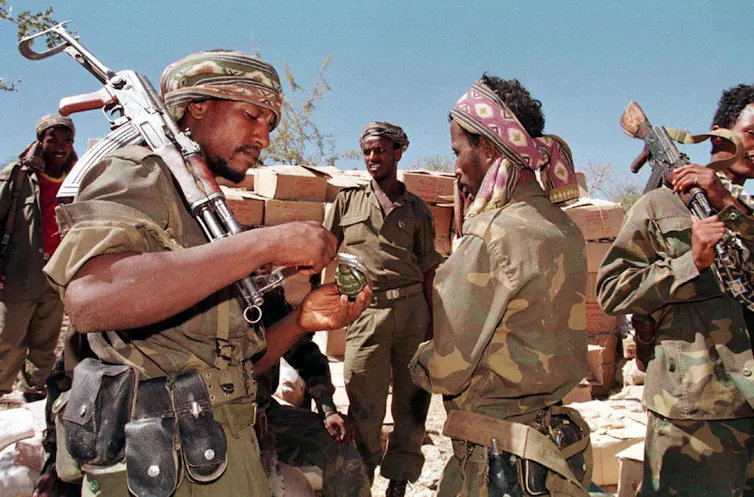
One Eritrean told me it was necessary to maintain military preparedness and “national unity”, given tensions with Ethiopia. However, since 1998, Isaias (Eritreans are referred to by their first names) has steadily accumulated power, arresting opposition figures and journalists and cancelling elections.
When Isaias took this authoritarian turn, officials in Western capitals expressed disappointment. He had been hailed as a new model of African leader who might catalyse a democratic wave across the continent. In 1995, then-US President Bill Clinton welcomed Isaias to the White House, applauding Eritrea’s initial steps towards democracy and a free market economy.
Hopes were high that Isaias would entrench the people at the centre of Eritrean politics. Such optimism proved unfounded.
The birth of a nation
The boundaries of present-day Eritrea – and the beginnings of an Eritrean national consciousness – date back to its colonisation by the Italians in the 19th century. After the British expelled the Italians during the second world war, most Eritreans hoped for the birth of a sovereign state.
However, diplomatic horse trading led to a UN resolution that subjected Eritrea to a forced marriage with Ethiopia in 1952. This was largely because the British had other priorities in the region. The whims of Ethiopian emperor Haile Selassie, universally hailed in Western capitals, took precedence over Eritrean aspirations.
On paper, Ethiopia and Eritrea were equal partners in a federal structure. In practice, Eritreans were swiftly disenfranchised. In 1962, Ethiopia neutered the Eritrean assembly, effectively annexing the territory. Eritrea had been decolonised once, but then effectively recolonised by its larger neighbour.
Some Eritreans had taken up arms even before Selassie reduced it to an Ethiopian province. And just as they had been disregarded in post-WWII diplomatic forums, they won little external support during their struggle.
Facing a much larger military force, the Eritreans developed a resourcefulness and resilience that allowed them to eventually win independence in 1993, led by Isaias, then-commander of the Eritrean Peoples’ Liberation Front (EPLF).
As seen in places like Northern Ireland and Ukraine, when conflagrations drag on, identities crystallise. The 30 years of war with Ethiopia certainly reinforced Eritreans’ sense of national identity and determination to resist their oppressors.
Resourcefulness in the face of oppression
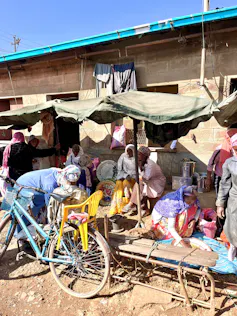
That internal cohesion persists. From the Red Sea to highland camel markets, I witnessed the co-mingling of peoples of diverse ethnicities and religious backgrounds with no sign of rancour.
In Asmara’s Medeber market, resourcefulness is apparent, too. In a maze of dusty alleys, craftspeople create household items from scrap metal, second-hand tyres and 44-gallon drums.
Yet, self-reliance can have unforeseen consequences under an authoritarian system. Seasoned Africa correspondent Michela Wrong observes that the EPLF, achieving victory against the odds, developed an “indomitable self-belief”. The collective effort that defied Ethiopian domination never translated into a newly minted democracy. The party, and Isaias in particular, could countenance no political vision other than their own.
Historical experience also instilled in Isaias a distrust of the international community, perhaps understandably given Eritrea’s frequent betrayals. After his moment in the sun as an African liberator, Isaias turned inward, all but making Eritrea a hermit fiefdom.
To the visitor the impacts of authoritarian rule are obvious. There is a visible – if not threatening – military presence across the country and tell-tale signs of poor governance are everywhere.
If war were to erupt again, the outcome would be uncertain. This time, Eritrea is ill-equipped to respond, and it is the people who will – yet again – suffer the most.


