

Nest-building chimpanzees seem to anticipate future weather
- Written by The Conversation
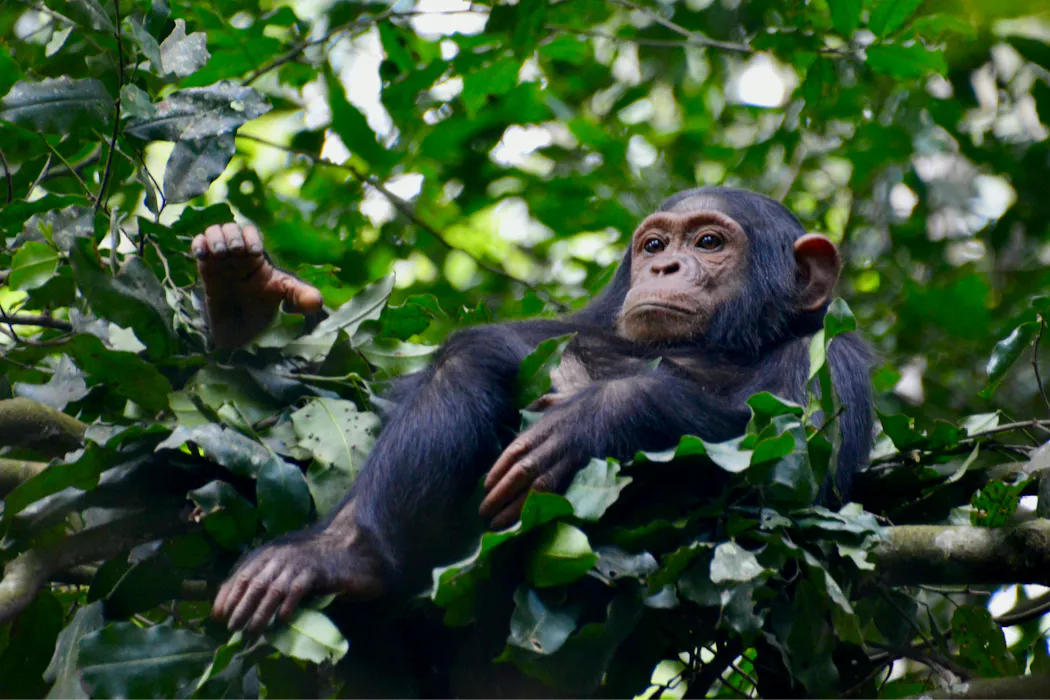
Every evening, as they move from place to place through the forest, chimpanzees stop to build a nest – most often in a tree – to sleep in. Using a selection of branches, leaves and twigs, they create comfortable and safe spaces to get some shuteye.
Like human beds, these are places to rest – but they also help chimps stay warm or cool and protect themselves against the weather. As you might expect, how and where chimpanzees build their nests depends on things like temperature, humidity, wind and rainfall.
But how do they make these choices? Previous research has shown the construction is related to the conditions at the time when the creatures are building the nest.
In new research, published today in Current Biology, my colleagues and I show that chimps are a little bit cleverer than you might expect: they seem to build their nests in ways that anticipate what the overnight weather will be.
A year in Rwanda
We conducted a field study on eastern chimpanzees in Nyungwe National Park, Rwanda, a cool and humid mountain forest. Over a 12-month period, we collected detailed data on the structure of nests, the characteristics of their chosen sites, and the kinds of trees the chimps chose.
We also measured how well different kinds of nests insulate against cold and heat. At the same time, we made detailed records of weather conditions when the nests were being built and throughout the night.
This let us test whether chimpanzees respond primarily to immediate environmental conditions, or whether their nesting decisions are better explained by the conditions they experience later during the night.
Chimpanzees are always adjusting their behaviour
Our results show chimpanzees consistently adjust their nesting behaviour in relation to environmental conditions. They preferred to build nests in places that were warmer, more humid and less exposed to wind than surrounding areas.
Nest structure and insulation varied systematically with environmental conditions. In cooler and wetter conditions, nests were thicker and deeper – indicating the chimpanzees put more effort into insulation when conditions are tougher.
We also found that factors such as the width and depth of the nest influenced its insulating ability.
The chimpanzees tended to build more insulating nests when weather was colder and when it was more humid, both during nest-building and overnight.
In cooler and wetter conditions, the chimps also built their nests higher, in taller trees with denser leaf cover. This makes sense: it would be a more stable microclimate with more shelter from rain.
Are chimps thinking ahead?
Importantly, nesting decisions aligned more closely with overnight environmental conditions than with those at the time of construction. When we took overnight weather into account, we found we could explain the variation in nesting behaviour much better than if we used only the current conditions.
One possible explanation is that chimpanzees use environmental cues, such as shifts in temperature, humidity or atmospheric pressure, that are linked to upcoming weather.
These cues may allow them to adjust nest-building behaviour in advance. Does this mean they predict or forecast future weather? Not quite.
But it does show their behaviour is consistent with reacting to environmental signals that are associated with later conditions. Either way, the chimps display a remarkable sensitivity to their environment – and a grasp of how to live in it.
Read more https://theconversation.com/nest-building-chimpanzees-seem-to-anticipate-future-weather-281537


