

Is Netflix’s Queen Cleopatra cultural appreciation or cultural appropriation?
- Written by The Conversation
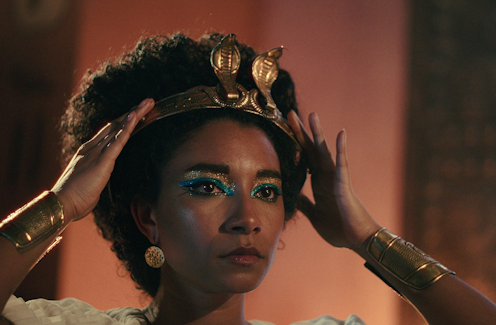
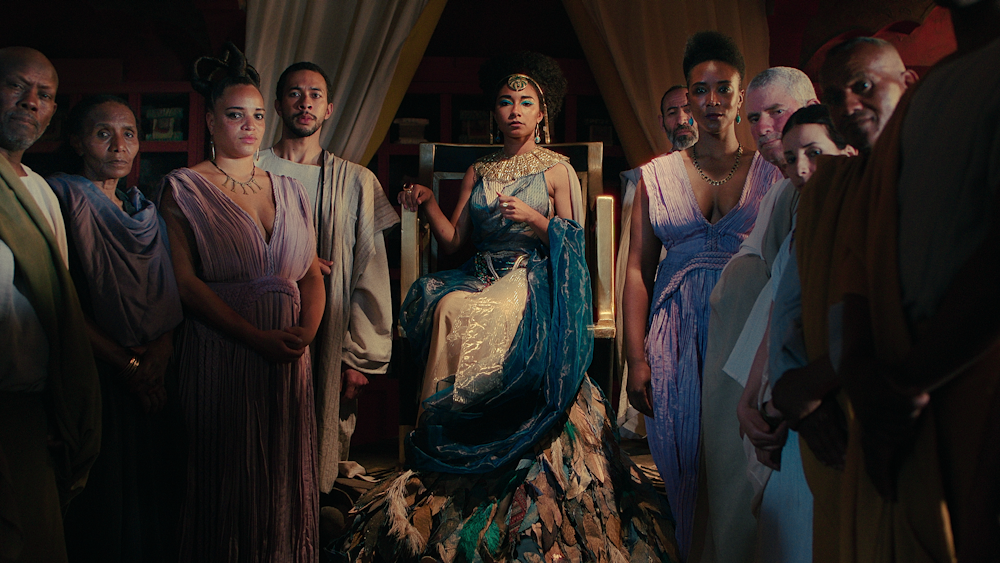
On May 10, Netflix dropped its four-part docuseries, Queen Cleopatra. Executive produced by actress Jada Pinkett-Smith as part of her African Queens series, Queen Cleopatra focuses on Cleopatra VII, the last pharaoh of Egypt, through testimonies and dramatic reenactments.
The docuseries has been met with backlash over Cleopatra being depicted as Black. It is viewed as a form of cultural misrepresentation and historical revisionism. These point to Netflix’s appropriation of Egyptian culture and heritage.
The fact that Queen Cleopatra is classified a documentary over drama has further angered audiences because it lends misplaced legitimacy to the series and its depiction of Egyptian history.
This raises important questions. What is cultural appropriation? Why is this docuseries problematic? How should brands take more responsibility when representing other cultures?
What is cultural appropriation exactly?
In my work, cultural appropriation takes many forms, such as
non-Indigenous people wanting to learn a culture’s traditions, then turning it into a business (for example, sweat lodge ceremonies)
movies and books adopting real or imagined Indigenous traditions (such as in the film Dances with Wolves)
jewellery using Indigenous symbols
and the natural health market adopting Chinese traditional medicine.
Some can be clearer forms of appropriation than others. Mimicking symbols or names are intentional forms of appropriation (such as the case of Lego using Maōri names), compared to the easy entanglement of culture and intellectual knowledge (for example, fashion designs inspired by varied cultures).
Read more: Why the discovery of Cleopatra's tomb would rewrite history
Why is Netflix’s Queen Cleopatra a case of cultural appropriation?
The type of appropriation observed in the Queen Cleopatra docuseries is best described as “subject appropriation”. This is where outsiders make the culture or Indigenous people’s lives the subject of their story.
Cleopatra’s story told by Western experts on Egypt’s behalf is an act of separating the culture from its people. Not only does it exploit Indigenous cultural knowledge, but it nullifies cultural meanings specific to Egyptian natives.
A wave of public outrage in Egypt arose over the narrative of the series. Since the trailer’s release, prominent Egyptian personalities, including comedian and political activist Bassem Youssef, called out its distortion and appropriation of Egyptian culture.
The outrage is not about Cleopatra’s skin as depicted in the docuseries’ click-bait trailer. Skin colour did not matter to ancient Egyptians, nor does it matter in modern Egypt. It is Cleopatra’s remarkable achievements and lasting reputation that makes her a target for different groups claiming her as their own, such as Cleopatra being labelled as an “African Queen” instead of an Egyptian Queen.
The docuseries’ questionable experts
Besides what many people, including renowned Egyptian archaeologist Zahi Hawass, have called to be a form of cultural identity theft, the docuseries’ lack of consultation with Egyptian experts is perceived as a sign of disrespect.
Instead, Netflix invited Western “experts” with distorted views on facts. The documentary opens with a story from Classics Professor Shelley Haley saying that her confidence in Cleopatra’s ethnicity was influenced by her grandmother (not history) telling her, “I don’t care what they tell you in school, Cleopatra was Black.”
Others’ comments compared Cleopatra to a “chameleon”, saying she “looks different depending on who is depicting her”, and “the appeal of Cleopatra is that we imagine her” however we choose.
Statements that mix imagination and historical fact in a so-called documentary are the core argument of Egyptian lawyer Mahmoud Al-Semary’s legal case against Netflix. He calls for the immediate shutdown of Netflix in Egypt for its distortion of Egyptian history.
What is possibly the clearest example of cultural disrespect is the inclusion of Colleen Darnell as an expert. Known as a “vintage Egyptologist”, Darnell presents herself in cosplay from the 1920s. It is problematic because that era is synonymous with a time of violence by British colonial rulers in Egypt and Western nations robbing Egyptian artefacts.
The persistent problem of cultural appropriation
Appropriation and distortion of a culture’s beliefs can leave Indigenous people feeling violated and manipulated.
Netflix, a giant streaming platform, is guaranteed to have more viewers and make more money with their docuseries than Egypt’s recently released 90-minute documentary on Cleopatra. This way, Netflix deprives Egyptians of possible financial gains, while failing to recognise Egypt’s rights over others’ use and adaptation of their own history and culture.
Many argue Netflix exploited and offended Egyptian culture with this docuseries. A positive response to claims of appropriation would be for Netflix to prioritise its moral obligation of integrity and respect for other cultures over profit. However, the director’s reaction in the media was to call the claims “laughable”.
To avoid cultural divides, it is imperative that brands consider their responsibilities if and when representing another culture. It begins with positive intent, and ends with respect, cultural consultation and consent.


