

Fixing broken flood gauges is important. But most of us don't evacuate even when we know the water is coming
- Written by The Conversation
Devastating floods have hit community after community on Australia’s eastern seaboard over the last three years. Weather systems were dynamic and difficult to forecast.
What made the impact worse still was the fact that many of our flood gauges were unreliable or broken. In some cases, residents simply didn’t know the extent of the floodwaters rushing toward them.
As a resident of a flood-hit New South Wales town told us:
During that second flood we knew that gauge was wrong. It was wrong by metres. On the night of the February flood, very few people could sleep […] I remember looking at [warnings] and I’m thinking ‘What? How can that be?’
New federal funding for a better flood warning network is wise. But flood gauges are only one part of a total warning system. Social factors also require consideration.
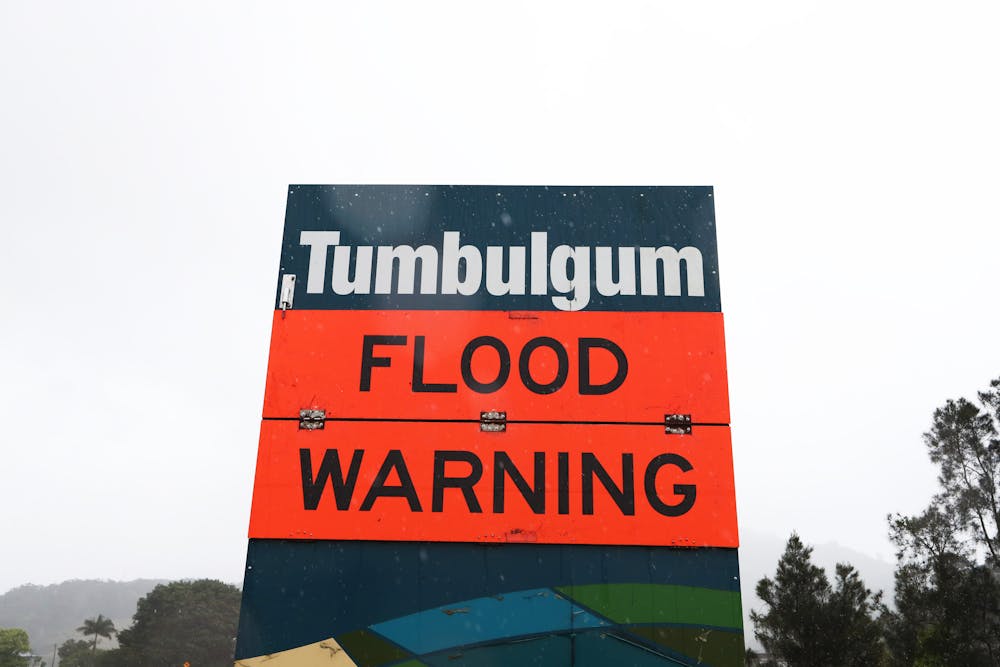
Gathering better data to improve flood warnings
Public money (A$236 million) will be used to upgrade or purchase flood gauges for high priority catchments, replacing infrastructure found to be unreliable or broken.
We’ve known there were problems with our flood warning infrastructure for years.
But these issues came to a head during the widespread flooding in the first half of 2022 when communities were misled, confused or wrong-footed by unreliable information. Subsequent inquiries in New South Wales and Queensland found major issues and recommended the federal government take responsibility for building and maintaining the flood warning network.
We’ve long known that early warning systems boost public safety and reduce deaths. They cut financial losses and make possible earlier planning and responses by emergency services.
But by themselves, they are not enough. Some people will leave when warned, but others due to a range of social and economic factors, are either unable to leave or choose to stay. That’s why we need social supports alongside warning systems.
In our recent research, we interviewed almost 200 NSW and Queensland residents affected by floods in early to mid 2022 and surveyed 430 others.
People told us they relied heavily on river gauge data – when it was available and working. But when the gauges were broken or giving incorrect data, residents were left worried and confused.
Longtime residents in low-lying rural areas and in some upper catchment areas often had a good understanding of how rain and stormwater behaved in their landscape and how that translated to flooding. When they shared this knowledge on community social media pages, it was highly valued by many other residents, who used it to help interpret gauge data and river heights.
What matters is how people respond to warnings
It’s clearly important to give people warning about the size and timing of a flood which may affect them. Successful warnings are those which are accurate and timely, relevant to the specific area, motivate people to evacuate, if need be, and lead to reduced loss of life and property.
But even when warnings are received in time, research shows they’re unlikely to actually motivate safe, timely evacuation by most of the people at risk.
Our own research found over 60% of surveyed residents did not evacuate.
Why did people stay? It wasn’t for lack of timely warnings, for the most part.
For some, staying was the plan. Many had stayed in previous floods and had been safe. Others stayed to lift up their belongings, protect against looting and start the clean-up quickly after the waters receded. Some stayed to look after less mobile dependants, care for pets and livestock, or because they had nowhere else to go.
After the 2017 NSW floods, researchers found a similar approach of sheltering in place in some locations.
The problem is, previous floods are now no longer a reliable guide. Climate change is leading to more intense rain and more extreme floods. Choosing to stay because you were safe last time is no guarantee.
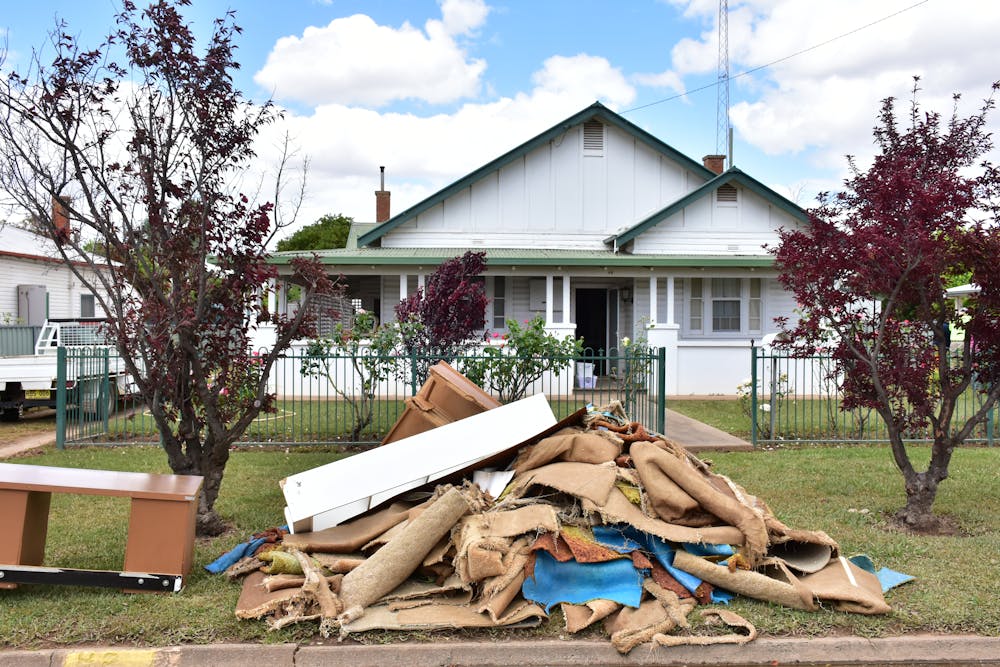 Most people in the path of floods choose to stay or have no way to leave. One common reason is to make the clean-up easier. This photo shows the aftermath of floods in Forbes, NSW, in late 2022.
Lucy Cambourn/AAP
Most people in the path of floods choose to stay or have no way to leave. One common reason is to make the clean-up easier. This photo shows the aftermath of floods in Forbes, NSW, in late 2022.
Lucy Cambourn/AAP
We need better supports
Given that many people choose to stay, we must do more to help people make the decision to evacuate and ensure those who are determined to shelter, or have no other choice, are better prepared to do so safely.
Each of us has a social context which greatly shapes our ability to act on information. Life might be complex or chaotic due to precarious housing, limited finances, poor health, caring responsibilities, or a lack of community connections. These social factors may make any of us reluctant – or simply unable – to act on warnings and prepare or evacuate.
For instance, one interviewee told us:
I am reliant on support workers to access the community, and due to the rising waters in outer suburbs the supports I had were unable to physically get to me.
Another said:
I was pregnant at the time and couldn’t do the heavy lifting required. [I] didn’t have the vehicle space to load things to remove from the property.
Warnings are not a guarantee of safety
Yes, it’s good the federal government is introducing a better way to monitor floods and warn people who live near affected creeks and rivers. But providing a warning is only part of the puzzle. We need many solutions that work together.
Sometimes warnings don’t get through. Sometimes disasters escalate rapidly. Sometimes people can’t or won’t take action. Warnings alone do not produce community resilience, but they can help.
As we brace for a future where natural hazards intensify, we need more resilience.
For floods, that means focusing on community connections, education, health and livelihoods, as well as land use planning and building design that reduces exposure to flood risk in the first place. We also need technical solutions like warning systems. Together, this will lead to a more resilient future.
Read more: Lismore faced monster floods all but alone. We must get better at climate adaptation, and fast
The authors would like to acknowledge their fellow researchers on this project: Professor Kim Johnston, Associate Professor Anne Lane, Dr Barbara Ryan, Dr Harriet Narwal, Madeleine Miller, Helga Simon, and Dipika Dabas.


