

What happens in a 'sobering up' centre?
- Written by The Conversation
Aboriginal and Torres Strait Islander readers are advised this article names and references deceased persons.
This month the Victorian government announced it’s establishing a permanent “sobering up” centre as part the state’s decriminalisation of public drunkenness.
Instead of arresting or fining you, police can take you to a “sobering up” centre if there is one in the area.
This is in line with a general move to treat alcohol and other drug problems, such as intoxication, as a health rather than policing issue. Most other states and territories (including Western Australia, the Northern Territory, South Australia and Queensland) have established sobering-up centres.
So what happens in these centres, and who will benefit from them?
Sobering-up centres
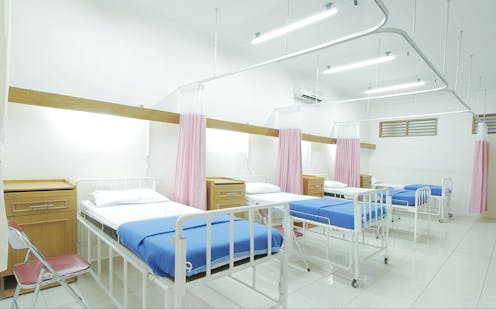
Sobering-up centres are safe places where people who are too intoxicated to look after themselves can go to recover.
It’s safer than being in a police cell because there are health professionals who can provide health care if someone is sick or injured.
Sobering-up centres provide something to eat, a shower, clean clothes and a laundry service. There are beds so people can rest or sleep, usually for up to 24 hours but sometimes longer.
The centre’s health workers are usually alcohol and drug workers, case workers or Aboriginal health workers. They sometimes include nurses and counsellors. The workers assess and monitor the person’s level of intoxication while they are at the centre and can arrange medical intervention if needed.
When some people stop drinking, they can become very unwell as the alcohol leaves their body so they may need to be moved to a hospital withdrawal setting. This can happen just a few hours after they stop drinking. Some people have seizures, severe shaking, hallucinations and dangerously high blood pressure during withdrawal.
The centres can also provide access to help and support, including referral to treatment, such as withdrawal and rehabilitation services, once the person is feeling better. They also may offer on-the-spot brief counselling about the person’s alcohol use or other issues, and provide harm-reduction information so next time they drink they have a better chance of avoiding being in risky situations.
When someone has a problem with alcohol, the first step is to reduce immediate harm because it can sometimes be a slow process to change longstanding drinking behaviours. Think about how hard it is to stick to those New Year’s resolutions we have all made. Even when people are really motivated to make changes it can be difficult and they may have several goes before they achieve progress.
Do sobering-up centres work?
Sobering-up centres are effective at reducing the harms caused by alcohol including accidents, self-harm and harm to others. One evaluation of the use of sobering-up centres in WA over a 15-year period found the use of these centres, compared with traditional police lockups, resulted in:
reductions in police time and resources previously involved in detaining and monitoring intoxicated people in lockups
reduced use of court time and resources
reduced levels of domestic violence and other problems associated with alcohol abuse
reduced burden on hospitals because of fewer hospitalisations for alcohol-related illnesses and accidents.
Surveys of law enforcement overseas indicate strong support by police for the use of sobering-up centres, over traditional arrest, for non-violent individuals who are publicly inebriated.
Read more: From tough love to interventions, what works when a loved one is struggling with addiction?
Can anyone access them?
A person will be able to access the sobering-up service if they:
are intoxicated in public
are within the service region
do not have urgent health needs that require an emergency response
consent to receive the service
do not pose a serious and imminent safety risk to themselves or other people.
As well as being taken there by police, a person can take themselves to a sobering-up centre or be taken by a friend or family member.
Are sobering-up centres a good idea?
Public drunkenness laws disproportionately affect Aboriginal and Torres Strait Islander Peoples and homeless people, partly because they are more likely to be in a public place when drinking, and partly because of overpolicing of these populations.
The Victorian government committed to decriminalising public drunkenness in 2019 during the coronial inquest into the death of Yorta Yorta woman Tanya Day. She was arrested for public drunkenness in 2017 and died while in custody after hitting her head on the concrete wall of her cell. The coroner said her death was preventable.
There have been five more Aboriginal deaths in custody in Victoria since 2020. The death in custody rate for Aboriginal people in Australia is disproportionately high compared with the rate for non-Aboriginal people, representing one in five custody deaths.
Sobering-up centres are a more effective and less harmful response to Aboriginal and Torres Strait Islander people found intoxicated in public places than a police cell.
There has been a general shift in both policy and community sentiment away from criminal justice approaches to alcohol and other drugs, and towards health and welfare approaches. More people in the community endorse spending on education (41.2%) and treatment (32.1%) to address alcohol issues than law enforcement (26.7%). Support for harm-reduction measures for illicit drugs is showing the same trend.
A US study found every dollar spent on drug and alcohol treatment saves the community $7 by reducing use and criminal behaviour, and improving health, wellbeing, and participation in the community and employment.
Shifting alcohol and other drug responses from law enforcement to health and welfare reduces the harms associated with coming into contact with the criminal justice system, saves money that can be reinvested into effective prevention programs, and increasingly has the support of the general community.
Read more: To reduce harm from alcohol, we need Indigenous-led responses
Read more https://theconversation.com/what-happens-in-a-sobering-up-centre-211038


