

Shayda: this unflinching portrayal of domestic violence marks a profound shift in Australian cinema
- Written by The Conversation
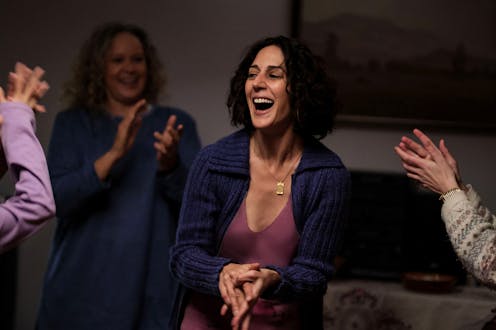
Australian cinema has often struggled to authentically portray the cultural lives of Middle Eastern Australians. Stereotypical stories frequently sidestep the intricacies of social bonds, as well as the cultural differences in domestic life and familial attachment.
Noora Niasari’s Shayda refreshingly challenges this trend.
Shayda is a powerful debut feature for the Iranian-Australian filmmaker, in a worldly film which marks a profound shift in Australian storytelling and Australian cinema.
The film avoids common Australian film tropes, steering clear of clichéd Aussie humour, traditional Australian archetypes like pristine beaches, the gothic outback and heroic male personas. Additionally, it refrains from marginalising the Middle Eastern characters.
It presents an unflinching portrayal of domestic violence and the grim reality of an Iranian woman trapped in an oppressive marriage.
Zar Amir Ebrahimi delivers a remarkable performance, embodying Shayda’s vulnerability, strength and inner turmoil, immersing the audience in her world of yearning and pain.
Hushed conversations and mounting tension
Shayda is living in Australia, in an unspecified city, with her husband, Hossein (Osamah Sami), and their six-year-old daughter, Mona (Selina Zahednia). She had previously tried to divorce her husband in Iran; now she seeks refuge in a women’s shelter in Australia.
Beautifully directed domestic scenes between mother and daughter show Shayda striving to provide Mona with some stability. But when a judge grants visitation rights to Hossein he re-enters their lives, reigniting Shayda’s fears he may attempt to take Mona back to Iran.
From the moment the film begins, a looming threat of child abduction keeps us on edge. This tension only intensifies with each seemingly ordinary scene, such as Mona having McDonald’s with her father in a suburban food court. His sly attempts to gather information about his wife betray his deep love for his child.
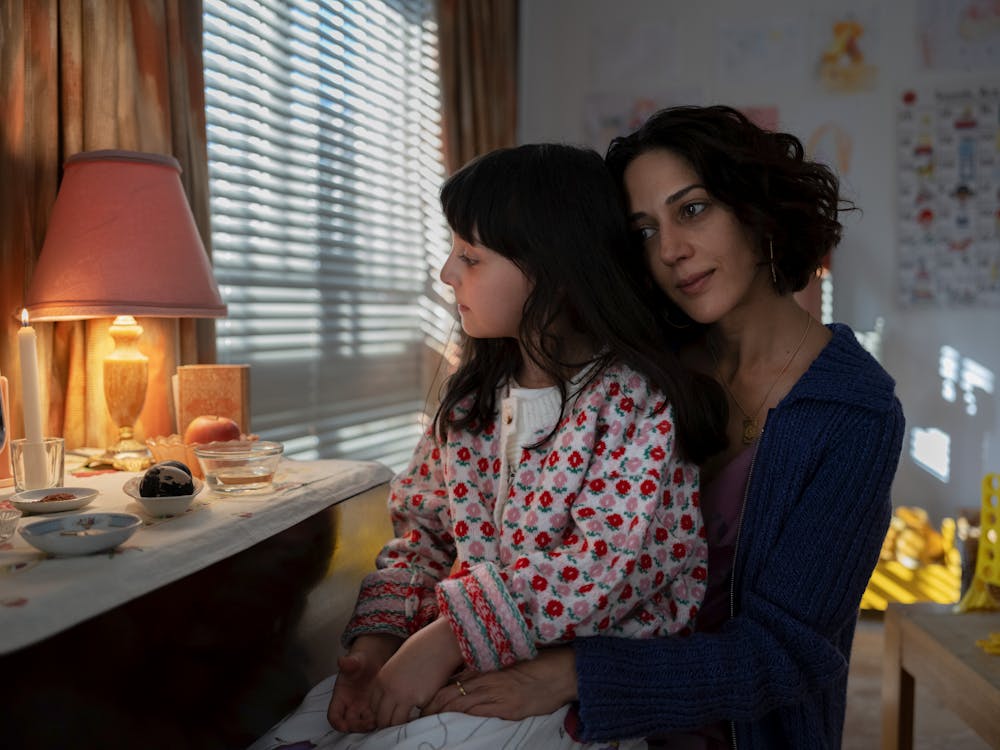
The women’s shelter is run by the formidable and compassionate Joyce, played masterfully by Leah Purcell. A particularly poignant scene unfolds as Joyce helps Shayda complete her divorce forms in English with the aid of an interpreter. Through this bilingual exchange, we gain insight into the extent of her husband’s violence. Such scenes are rich with information, unravelling gradually through hushed conversations and mounting tension.
Shame and loss
We slowly learn about Shayda and Hossein’s journey from Tehran to Australia for education. However, Hossein’s connections prevent Shayda from pursuing her own studies, with her study visa mysteriously halted.
Now, Hossein wants his family back together. He promises Shayda more freedom. But his desire for reconciliation is driven more by jealousy and shame than love.
Shame is the underlying theme of the film. Both Shayda and Hossein are ensnared by cultural and religious expectations. While Hossein blindly adheres to the social contract of a violent patriarchy, Shayda courageously defies societal norms.
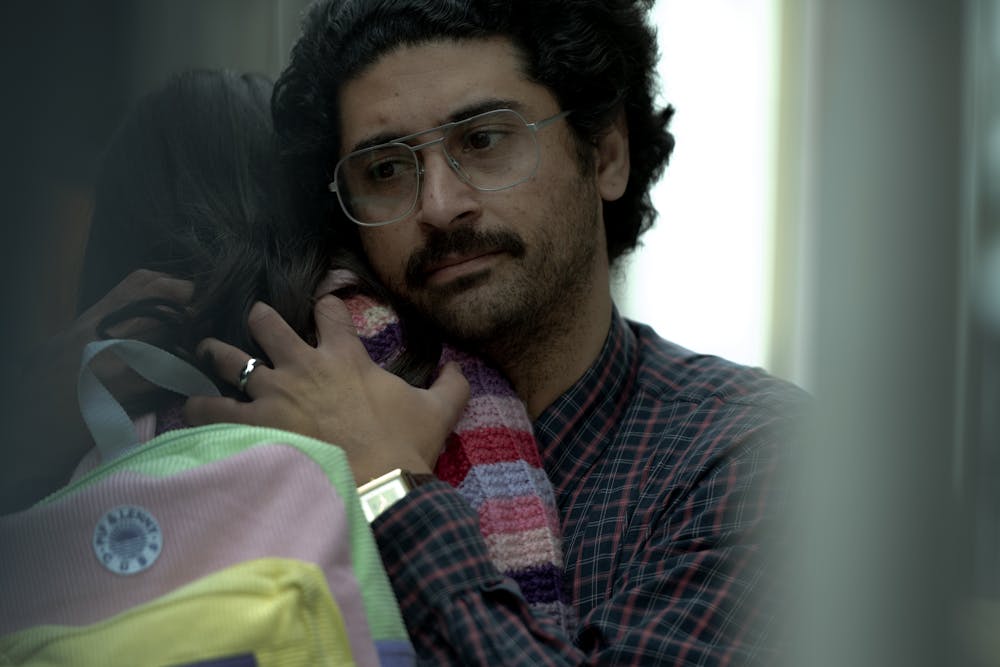 Hossein’s desire for reconciliation is driven more by jealousy and shame than love.
Jane Zhang/Madman Entertainment
Hossein’s desire for reconciliation is driven more by jealousy and shame than love.
Jane Zhang/Madman Entertainment
During a phone call with her mother in Tehran, Shayda learns of the shame her family endures due to her defiant actions.
The film also delves into themes of loss, both of one’s homeland and familial ties left behind.
One of the film’s most compelling aspects is its timeliness. Shayda serves as a testament to the enduring strength of Iranian women fighting for their basic rights, resonating powerfully against the backdrop of the ongoing women’s revolution in Iran.
Read more: Not 'powerless victims': how young Iranian women have long led a quiet revolution
Hope and rejuvenation
The film abounds with details that enrich the narrative. Moments like mother and daughter playfully performing television aerobics eloquently convey Shayda’s deep connection with her daughter.
As Nowruz, the Persian New Year, approaches, Shayda tries to celebrate with her daughter and her friends while confronting the prospect of new romance and unrestricted freedoms. The palpable chemistry between Shayda and her Iranian-Canadian love interest, Farhad (Mojean Aria), unfolds against the backdrop of cultural disparities and the violence of Hossein, which threatens to sever their connection.
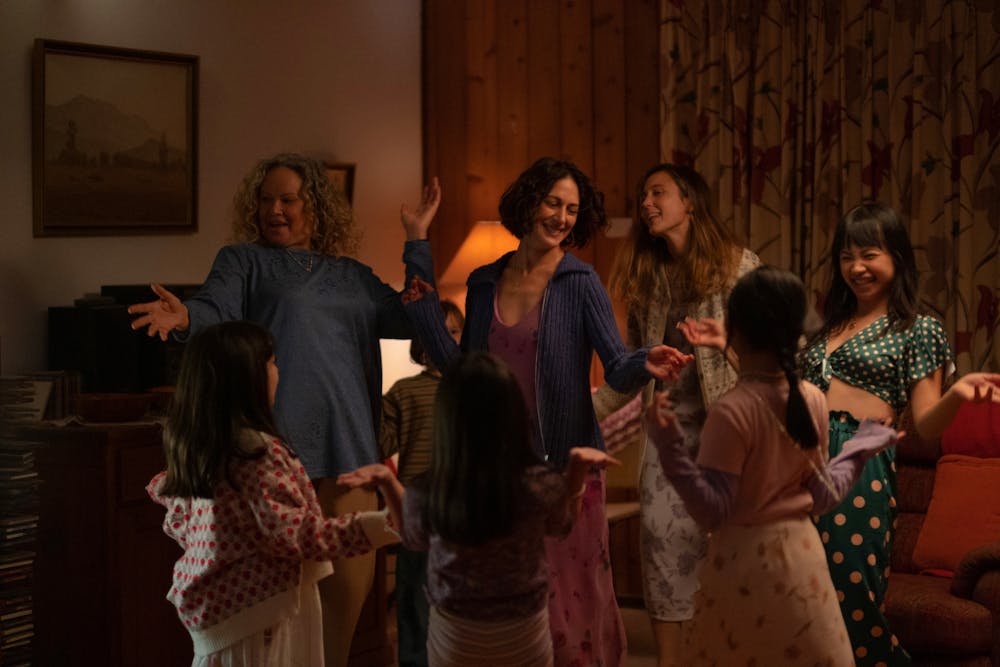 The film beautifully captures the essence of Nowruz as a symbol of hope and rejuvenation.
Jane Zhang/Madman Entertainment
The film beautifully captures the essence of Nowruz as a symbol of hope and rejuvenation.
Jane Zhang/Madman Entertainment
A haircut scene holds profound significance as Shayda chops off her hair in a desperate bid for freedom, symbolising a new beginning and the arrival of Nowruz. Shayda’s gift to Mona of a goldfish becomes a symbol of hope. The sprouting of seeds on the window sill and the preparation of Persian food and sweets reflect the migrants’ connection to their homelands. These scenes beautifully capture the essence of Nowruz.
The film subtly unveils the harsh reality of domestic violence amid migration and cultural difference through minimal dialogue and nuanced storytelling. Drawing from the filmmaker’s personal experiences, Niasari’s sensitive direction reveals layers of Shayda’s character and story, making her both relatable and magnetic.
Sherwin Akbarzadeh’s cinematography is breathtaking, juxtaposing the suburban Australian landscape with the sombre tones of a dimly lit domestic interior. Subtle hints of colour and closeup shots of household objects immerse us in the daily life within the women’s shelter.
The supporting cast delivers robust performances, infusing the narrative with authenticity and emotion.
For those tempted to leave the cinema before the credits roll, don’t. The inclusion of scenes from the director’s home videos, featuring a young girl who appears to be the director herself dancing in the living room of the women’s shelter while her mother talks candidly to the camera, reinforces the film’s intensity with the affecting resonances of a documentary.
Niasari’s dedication to her mother and all the courageous women of Iran permeates every frame of this film.
Shayda is in cinemas from today.


