

Denial is over. Climate change is happening. But why do we still act like it's not?
- Written by The Conversation
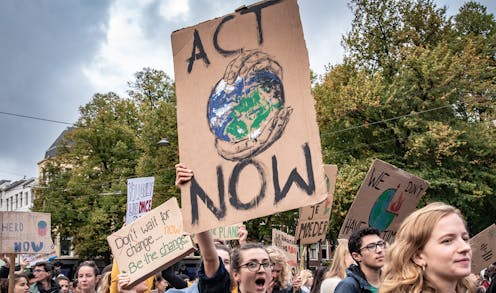
Climate-fuelled disaster is now front-page news, as record-breaking floods, fires, droughts and storms keep arriving.
The damage done by climate change is systemic and pervasive, resonating through our communities, economies and environments. It manifests in many ways, from empty spaces in supermarket shelves to houses left unlivable after floods, anxious communities, collapsing ecosystems and emergency services stretched to capacity.
Climate researchers initially assumed that if you gave people the right information, we would act on it. Burning fossil fuels comes with severe consequences – so let’s phase out fossil fuels. But they found out very quickly this was not the case.
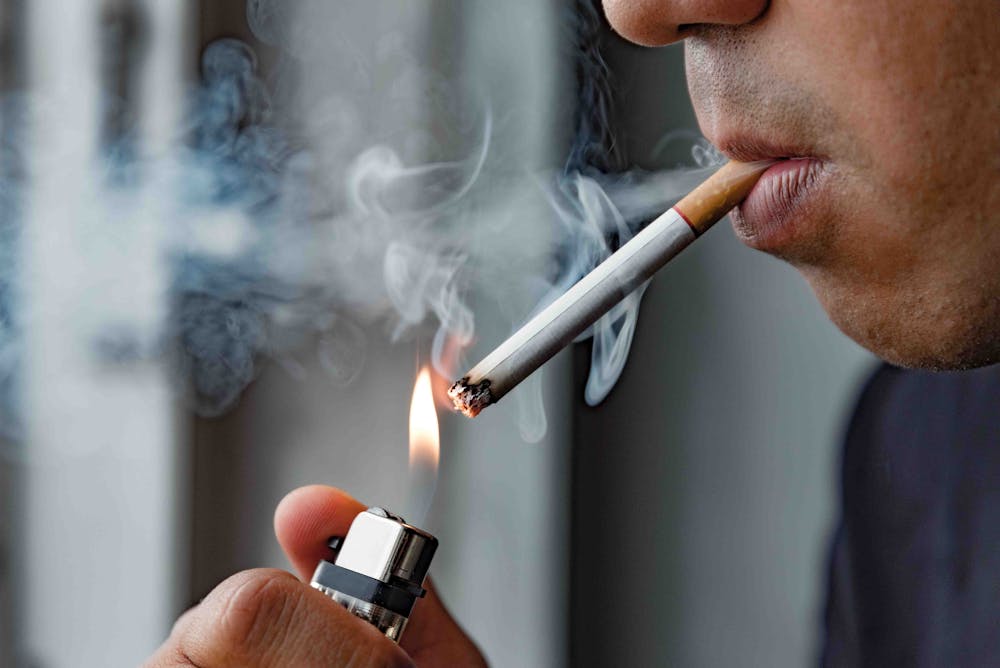
For many people, it triggered cognitive dissonance, where they knew climate change was happening but acted like it wasn’t. After all, many people still smoke, even though they know it is bad for their health. And many of us still fly to Italy – even though we know how many extra tonnes of carbon dioxide we put into the atmosphere.
But why is it so easy to understand but not act?
Change seems hard, doing nothing is easy
It’s because of public and private narratives we have grown up with. Our expectations of life are geared towards wanting comfort and stability.
This means not everyone has developed the ways of thinking needed to deal with the impacts (such as natural hazards) we are now facing. Sudden changes caused by these – such as the loss of a home – are almost invariably shocking and can create a sense of disbelief. How could this be? When do we get back to normal? Surely it won’t happen again?
Our research on systemic risks such as climate change adaptation suggests this disconnect is common. Because we expect and hope for stable normality, we find it hard to truly believe the changes we are seeing will continue.
There’s also a divide between who benefits and who pays. Your family trip to Iceland pays off for you in shared memories and good times. The damage in terms of emissions is spread across the globe. Often the damage done has less impact on the people who have done most to cause it, compounding inequality and eroding the ability of those most at risk to respond.
Adapting to the climate and working to reduce further heating can be an uncomfortable and at times painful process where we have to embrace and acknowledge our grief for the changing world. We’re often taught to avoid potentially dangerous or painful things – especially if they are unfamiliar. But now, doing what we’ve always done is not safe.
Then there are the limitations of individual action. No matter how committed you are to cutting your own climate impact, it makes very little difference if others aren’t doing the same.
Action needs to be collaborative and sustained over the longer term, favouring public good over individual vested interests and short term gains. The politicisation of action in Australia’s climate wars has polarised opinion and eroded trust in the research. It has also left some people feeling that their actions are too small to matter.
All of this means we can find it surprisingly easy to detach our own daily actions – driving to work, holidays in Queensland, watching Netflix – from the broader goals of getting emissions down to zero as soon as possible.
So how can we avoid climate hypocrisy?
Many of us understand the risks of climate change full well, but we do not accept the responsibility. That, in turn, means we may feel okay not to act. Or we may understand and accept the risk, but not have the resources or ability to act.
We know that presenting climate change as a problem without a solution or using fear tactics disengages and demotivates us. It can also feed anxiety, which undermines action.
So the first step to overcoming climate inaction is to identify where you can act directly, such as switching your second car to an e-bike, investing in solar panels, working on local re-vegetation projects or making climate-friendly consumer choices.
 Action helps make more action.
Shutterstock
Action helps make more action.
Shutterstock
Where you have influence, apply this through voting, education or advocacy. Humble actions matter because they accumulate to create change.
This isn’t to say you should give up holidays. It is about making informed choices. Ending the burning of fossil fuels will take time and our choices will change as we transition away from this.
But doing something is always better than nothing. Active responses can help reduce climate anxiety and they are also the panacea for avoiding climate hypocrisy. And while large-scale policy responses are necessary, individual action and pressure can help speed up the shift.
Climate change isn’t just a problem for scientists, engineers and governments. We need both large-scale and small-scale action. As the costs of climate change escalate, we can no longer afford to know about climate change but not act.
Read more: Our minds handle risk strangely – and that's partly why we delayed climate action so long


