

Why is gluten-free bread so expensive? A food supply chain expert explains
- Written by The Conversation
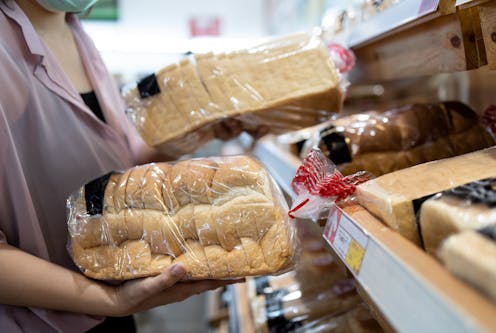
Before the cost of living hit Australian families hard, a group of consumers were already paying top dollar for their staples. Whether it be gluten free, dairy free or lactose free, people with special dietary requirements are used to spending more at the supermarket checkout.
A 2016 study from the University of Wollongong found that Australians were paying up to 17% more for a gluten-free diet.
Current examples are easy to find. A white sandwich loaf at Coles costs A$2.40 (or A$0.37 per 100g), whereas the cheapest gluten-free option costs $5.70 (or $1.14 per 100g). That’s over three times as much. Prices are closer comparing Coles Full Cream Milk at A$1.50 per litre with Coles Lactose Free Lite Milk at A$1.60, the exception that confirms the rule.
So why are allergen-free products more expensive?
Read more: Why does everyone seem to have food intolerances these days?
Is it the ingredients?
If manufacturers pay more for ingredients, this is usually reflected in the price of the final product. Regular and gluten-free bread share many common ingredients, but there is a substantial change where wheat flour is replaced by gluten-free flour. This ingredient may cost manufacturers around two times as much given the uniqueness of gluten-free grains, seeds, and nuts. These special ingredients are not as abundant or easy to process as wheat, and are also a bit more difficult to buy in very large scale.
For a simple reference, compare regular and gluten-free flour at Coles.
Gluten, a complex mixture of hundreds of related but distinct proteins, has unique properties. It is a binding agent that improves texture in recipes. Gluten-free bread therefore needs extra help to, literally, hold it together. Additional items such as thickeners, tapioca and maize starches are added to gluten-free recipes to improve viscosity and keep baked items in shape. That means a longer ingredient list and a slightly more complex manufacturing process.
So, from an ingredient perspective, gluten-free bread costs more than regular bread. This applies for other allergen-free products as well. But with so many common ingredients, it is reasonable to say that this is not the main explanation.
Is it manufacturing and transporting?
A substantial part of price differences between regular and allergen-free foods comes from economies of scale. Regular products are manufactured in very large quantities, while allergen-free products involve much smaller volumes.
Bulk buying from large suppliers gets you bigger discounts. The more machines in a factory, the cheaper it is to run them. Larger outputs coming from the same place mean smaller costs for each individual product. Given that you have fixed costs to pay anyway, size is king.
You pay the same amount for a grain mill regardless of whether you grind one kilo or one tonne of grains a day. Sure, you spend more on electricity or gas, but those are variable costs.
Read more: We're in a food price crisis. What is the government doing to ease the pressure?
Then, there is the need for rigorous quality control. The United Nations Food and Agriculture Organization has a detailed code of practice on food allergen management for food business operators, covering harvesting, handling, storage, transportation, packaging, and more. The Australia New Zealand Food Standards Code also sets specific standards.
Deep cleaning machines, thoroughly checking that standards are met, and scrapping whole batches when they are not makes manufacturing allergen-free products more complex and expensive. The implications for non-compliance vary in severity, from a simple recall to a costly infringement notice, plus reputational damage to consumer trust.

It is hard to exactly measure the impact of economies of scale and quality costs on the price of allergen-free products. Each manufacturer will have its own challenges and solutions. But it is reasonable to say a considerable chunk of the difference we see when comparing gluten-free bread with its regular counterpart comes from these factors.
Transportation costs follow a similar rule. If it is easier and quicker to fill your trucks with regular products, while allergen-free products have a hard time making a full load, there are disadvantages in the latter.
Is it the marketing strategy?
The final consideration on allergen-free food prices has to do with competition and willingness to pay.
A quick search on Coles’ website shows 276 results for “bread” once you remove the 42 items that are gluten-free. That means that there are many more brands and products competing for bread consumers than for gluten-free bread consumers. That’s over six to one! This means customers with dietary restrictions are at a disadvantage as they are beholden to the limited options on offer. As noted by the Australian Competition & Consumer Commission, “competition leads to lower prices and more choice for consumers”.
Also, fewer allergen-free products make it to the “own brand” list. Australians are relying more on these when facing the cost-of-living crisis.
There is also the willingness to pay, where consumers pay more for products deemed as having higher value. Research shows that on average consumers are willing to pay 30% more for food products that they perceive to be healthier.
Manufacturers and retailers more often than not will capitalise on that, increasing their profit margins for allergen-free products.
4 tips for saving money if you have allergies
People with dietary requirements looking to ease the cost of their weekly grocery shop should use the same strategies as every savvy consumer:
- research prices
- buy larger quantities where possible
- keep a keen eye on price reduction and items on sale
- consider replacing products tagged “allergen-free” with alternatives from other categories, such as going for rice instead of gluten-free pasta in a dish.
In the long run, if more customers choose allergen-free products it could lead to more volume and competition, bringing prices down.
Read more: Trying to spend less on food? Following the dietary guidelines might save you $160 a fortnight


