

Australia’s census is getting a stress test – keeping it going is good for everyone
- Written by The Conversation
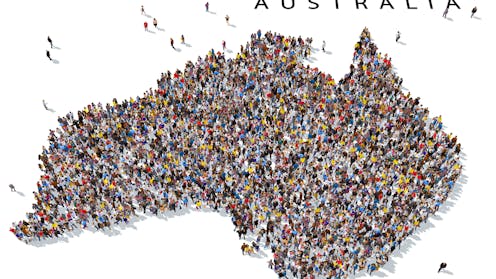
The Australian Bureau of Statistics will roll out a large-scale census test next month.
About 60,000 households will take part across the country to stress test the bureau’s collection processes and IT systems, ahead of next year’s full scale census. The survey questions change little, if at all, between the dry run and the census proper.
The population count will offer Australians an opportunity to reflect on who we are and the stories we share.
It comes at a time when traditional censuses are coming under threat worldwide.
Dying days of census
Census plays a significant part of the story of humanity. Jesus was born in a stable because a census ordered by Caesar Augusta had brought Joseph and Mary to Bethlehem.
They have changed down the centuries. But some things remain the same: the data collected is crucial for taxation, political representation and socio-economic indicators.
But national head counts are costly and cause enormous headaches for governments.
Vintage census television ad.In other countries, censuses are being killed off, replaced with information compiled by other means, such as administrative government data and population surveys. Think of the overseas versions of Medicare, Centrelink and the Tax Office.
National statistical offices in the United Kingdom and New Zealand have both flagged the end of traditional censuses
The UK Office of National Statistics had been preparing for census replacement since 2011, only backtracking after a public backlash.
Devastating under-enumeration of Maori New Zealanders in 2013 and 2018 meant administrative data was needed to supplement the 2023 NZ census. National data agency, Stats NZ, has now called it quits on traditional census altogether.
Funding cuts in Canada saw dual short- and long-form questionnaires which resulted in the partial collection of crucial socio-economic data akin to a sample survey. Statistics Canada now uses administrative and survey data to help meet its official statistics program.
Do we still need the census?
Replacing the census was floated a decade ago when dwindling government funding saw the Australian Bureau of Statistics struggling to “keep the lights on”.
Worried after 2016’s “censusfail”, the agency sought to ensure legislatively required data could be achieved even in the absence of a census. The bureau collected population and housing data using experimental administrative data, proving a national census isn’t necessarily needed for population estimates.
Costs associated with running a five-yearly head count and the decline in the social licence to collect such data are routinely used as justifications for replacing the census. Why conduct a wartime-like undertaking when you don’t have to?
The threat to the traditional census comes as no surprise to data scientists. Data is now ubiquitous, covering nearly every aspect of our lives – loyalty rewards, public transport cards and even frequent flyer points.
But there’s so much heavy lifting only a census can do and it’s crucial to helping Australia understand its diverse population.
More than just numbers
Data helps contextualise our lives.
Data made me feel less alone as a young person. I could see I wasn’t the only person doing it tough. Poverty wasn’t my fault, rather a wider structural problem politicians and policymakers failed to understand.
Being missed by the 1996 census as a homeless teen drives me to ensure Australia’s national census snapshot reflects the needs of the country.

Data holds powerful truths and has the capability to heal through information. Who we are, how and where we live, our commonalities and differences, and what might come next.
The Australian Bureau of Statistics is finding increasingly creative ways to communicate and bring Australians along for the ride.
Its outreach through social media makes data more accessible and fun.
The paraphernalia promoting previous censuses make it clear how much the agency is invested in ensuring complete coverage of all people. A significant departure from the stuffy practices of national statistical offices overseas.
Small solar powered census-at-school calculators have been given to pupils to help increase awareness among linguistically diverse communities. This is recognition children complete the census questionnaire in some families.
Decks of playing cards gifted to homeless people sleeping rough attests to the bureau’s dedication to ensuring all people are counted, no matter where or how they live
Behind The News’s take on the census.More inclusive family photograph
But it hasn’t always been plain sailing for the Australian Bureau of Statistics.
Last year’s unprecedented government interference in the independent conduct of the bureau resulted in proposed questions on sexuality and gender diversity being dumped from the 2026 census.
Scheduled testing was cancelled and related printed materials were likely pulped.
A public outcry forced a government back down with the sorry saga clearly demonstrating a myriad of critical data cannot be collected by other means.
The upcoming census family photograph will be more inclusive – Australians will have the opportunity to have their gender identity and sexual orientation reflected in the tally.
Family ancestry information will be broadened, and the questionnaire itself will better reflect Australian households overall.
The alternative to a census is a private, behind-closed-doors collation of personal information by government.
The good news is Australia’s census is alive and well and keeping up with the times.


