

Power-hungry data centres threaten Australia’s energy grid. Here are 3 steps to make them more efficient
- Written by The Conversation
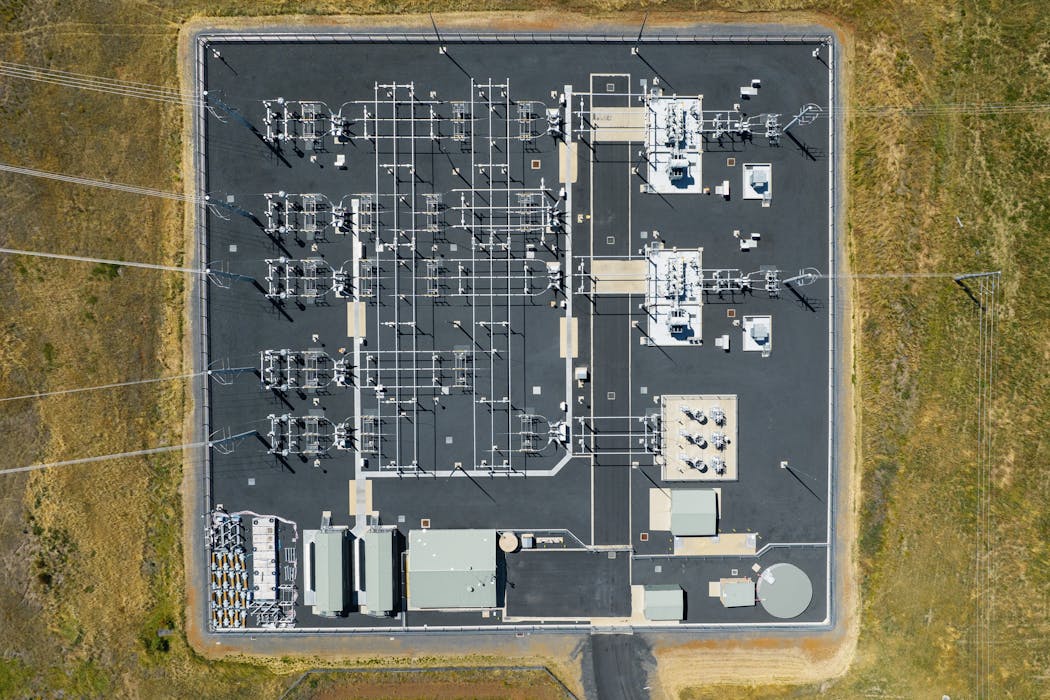
The Australian Energy Market Operator estimates data centres will consume 6% of Australia’s grid-supplied electricity by 2030.
To put that in context, that’s more than the current share of Australia’s healthcare and social assistance industry.
This reflects the rapid growth of Australia’s data centre industry – the backbone of artificial intelligence (AI). This growth is, in part, being driven by multi-billion-dollar investments from major tech players including AWS, Microsoft, CDC and NextDC. Atlassian co-founder Scott Farquhar has even suggested Australia could become Southeast Asia’s data centre hub.
The federal government is also fertilising the data centre industry. In August, for example, Treasurer Jim Chalmers announced the development of “national interest principles on data centres” as an outcome of the economic reform roundtable.
The power-hungry nature of data centres, however, poses major problems for the current energy grid in Australia. But there are three steps Australia can take to help power these facilities reliably and sustainably.
Increased volatility, increased risks
Unlike households and most industries, data centres require constant power. This adds pressure to an energy grid designed for variable consumption.
As more people use AI for more complex tasks, the workloads on data centres will intensify. This leads to increased baseload demand. But it also leads to unpredictable spikes and drops in demand which the grid was not built to manage. This volatility creates real risks.
In 2024, 60 data centres in northern Virginia suddenly disconnected from the grid due to a tripped safety mechanism. This unleashed a massive surge of excess electricity – which, were it not for network operators implementing emergency countermeasures, would have caused a massive blackout.
This near-miss highlighted the fragility of the grid when faced with sudden, large-scale data centre disconnections.
Clean energy can’t do it alone
The limitations of Australia’s current energy mix are another source of volatility.
While renewable energy is central to the clean energy transition, it alone can’t meet baseload and peak demands from data centres. The problem is twofold. First, renewables are intermittent. Second, energy storage and backup options can only be scaled to a limited degree.
This means most data centres will continue to rely on coal or gas in some form.
Most data centre operators have committed to 100% renewable energy by 2030. But in practice, this often means purchasing annual renewable credits or power purchase agreements.
These mechanisms don’t guarantee clean energy during actual operations – they simply help offset annual consumption. Meeting real-time demand with clean energy is a far more complex challenge. It requires greater investment in renewables, storage and transmission infrastructure. It also requires better coordination between energy regulators, utility companies and data centre operators.
These challenges were reflected in Australia’s new climate target – a 62–70% cut below 2005 levels by 2035. This sits below the 65-75% range initially proposed by the Climate Change Authority last year. Why the reduction? Among the cited “transition risks” is the significant growth of data centres.

Becoming a global champion
Australia has an opportunity to develop policies that synchronise data centre expansion with more efficient energy and grid management.
First, Australia should promote computing methods at scale that reduce emissions but don’t compromise capabilities.
For example, smart scheduling software can automatically shift energy-intensive tasks, such as model training, to off-peak periods when renewable energy is most abundant. This wouldn’t affect more everyday, less energy-intensive tasks, such as using ChatGPT, that require immediate responses. Companies such as Google have already adopted this approach to reduce grid strain without impacting user experience.
Alongside this, data centres should be required to inform power companies in advance of large-scale AI training runs that can cause dramatic energy spikes. Companies such as Hitachi Energy have called on governments to implement such rules to support grid management, citing other energy-intensive industries, such as smelting, where prior warning is already a common practice.
Second, Australia needs to accelerate advanced energy storage innovations, including batteries, pumped hydro and thermal energy storage. Research in many of these technologies is already underway, backed by government initiatives and private investments.
Data centre company AirTrunk, for example, is exploring different ways of implementing battery energy storage systems in its new data centres. However, more targeted financial incentives and support – such as through the Future Made in Australia and the National Reconstruction Fund – can help to bridge the gap between research and commercial scalability.
Third, Australia can require data centres to set what are known as “power usage effectiveness” – or PUE – targets to drive energy efficiency.
PUE targets are calculated by dividing the data centre’s total energy use by its IT equipment energy use. A PUE closer to 1.0 indicates greater energy efficiency.
PUE limits in China helped reduce its average PUE from 1.54 to 1.48 in just one year. Similarly, voluntary initiatives such as the European Union’s code of conduct for data centre energy efficiency, have consistently lowered the average PUE among participating facilities.
There is no shying away from the reality that data centres are energy-hungry behemoths. However, with the right planning and policies, Australia could be a global champion for data centre growth that supports, not derails, the clean energy transition.


