

Wasps and frogs keep evolving a crucial pain molecule in their venom. Now we know why
- Written by The Conversation
The next time you stub your toe, get pricked with a needle, or have your fingers jammed in the lid of a piano, you might pause to consider the marvellous way our bodies are able to heal such injuries.
As soon as the damage occurs, a range of different molecules in our bodies are activated and begin their jobs. These work to stem any bleeding, patch up breaks in the skin, signal our immune system to keep the wound clean, and initiate the longer-term repair process.
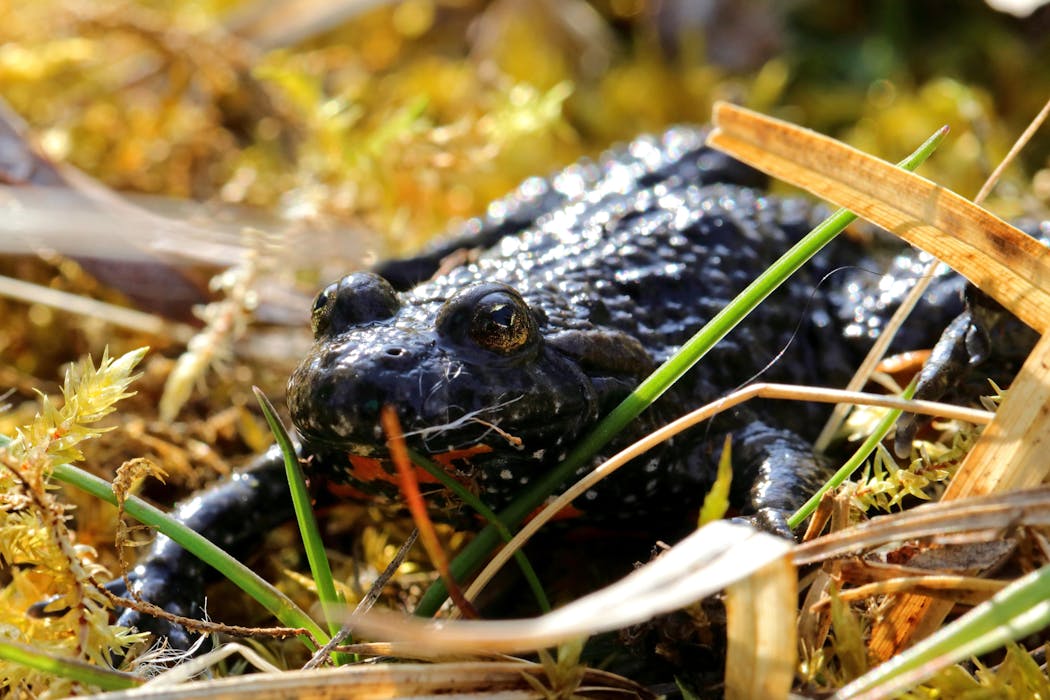
One such molecule is known as bradykinin. It is shared by all vertebrates, including mammals, reptiles, birds and fish. But it is also present in the venoms of some wasps and the toxic skin secretions of some frogs. These apparent inconsistencies in the distribution and function of bradykinin have puzzled scientists for decades.
In a new study published in Science, my colleagues and I reveal why bradykinin is in some venoms and how it got there. The answer shines a light on what has, until now, been an underappreciated feature of evolution which suggests life is not so random after all.
A multipurpose molecule
Bradykinin serves several purposes in humans and other vertebrates.
It is activated at a site of injury where it makes local blood vessels leaky, allowing passage of other helpful molecules to the wound. It also activates local sensory nerves causing pain, which teaches us not to do whatever it is that we did again, and serves as a longer-term reminder to protect that area and let it heal.
After identifying large quantities of bradykinin over and over again in different wasp venoms (paper wasps, yellowjackets, hornets and more) I decided it was time to tackle this longstanding puzzle.
We analysed the genes that encode these bradykinins to investigate why they were in certain venoms and how they got there. This revealed a surprising answer.
Evolutionary doppelgängers
When we see two people who look indistinguishable, we might assume they are identical twins or at least closely related (because our genes play an important role in our appearance, and closely related individuals share similar genes).
The same is true for molecules.
When scientists see identical molecules, this often reflects shared ancestry. But, as we discovered, this is not the case for bradykinin.
Wasp venom and frog skin bradykinins are unrelated to vertebrate bradykinin.
Instead, they are evolutionary doppelgängers – they look the same, but have completely different genetic backgrounds. In many instances they are completely structurally identical, atom-for-atom.
And the plot gets even thicker. We discovered that bradykinin evolved independently at least four times in wasps and ants – and probably even more times in frogs.
A way to deter predators
For there to be another individual who looks exactly like you (but is otherwise genetically not closely related) somewhere out there in the world is not inconceivable – there are a lot of other people out there.
But if there were six or seven, you might start to wonder if some other force was at play. We investigated what was behind the repeated evolution of bradykinin doppelgängers in wasps and frogs.
We showed that bradykinin in each wasp venom exquisitely mimics the bradykinin of that species’ vertebrate predators. This suggests it evolved in response to predation.
When delivered in large amounts via a sting, the bradykinin in venom deceives the predator’s body into thinking it has sustained an injury, triggering sensory nerves and causing pain and sensitivity.
This is very useful for the wasp – and it’s one of the reasons why some stings feel like getting stabbed by a needle.
In a similar way, frog skin bradykinins also evolved to deter vertebrate predators.
Life is not random
The independent evolution of the same trait in unrelated organisms is known as convergent evolution. Bradykinin is one of an increasing number of examples where scientists are uncovering convergent evolution at the level of genes.
Together these examples have revealed the crucial – and previously underappreciated – role of convergence in the evolution of life.
Convergent evolution tells us that genes are more flexible and that the environment plays a greater role in shaping them than has been widely accepted.
It also tells us that the evolution of life is not a random, unpredictable muddle of improbable outcomes. In fact it is progressing in an ordered, constrained, predictable – perhaps even inevitable – way.


