

Arts organisations say they want to be 'cultural leaders' – but are they living up to their goals?
- Written by The Conversation
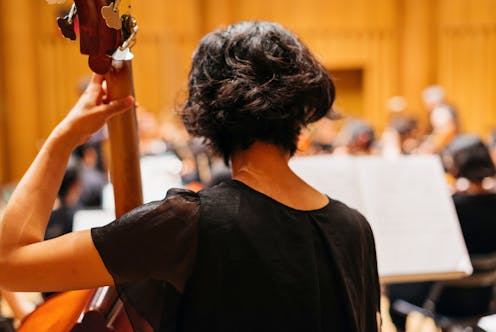
When the date of the referendum was announced, the Tasmanian Symphony Orchestra (TSO) quietly cancelled its Last Night of the Proms concert scheduled for the night before.
The reason, given by the orchestra to the media some weeks after the decision to cancel, was that:
to press ahead with a musical celebration of British pageantry on this night felt insensitive given its proximity to the Voice referendum the following day.
Yet, at the time of the decision there was no public statement. The orchestra informed ticket buyers individually. The fact that the cancellation was effected quietly raises questions about why the orchestra did not make any meaningful statement with the cancellation.
The Tasmanian Symphony Orchestra states it aspires to “serve our sector as cultural leaders”.
Indeed, many Australian arts organisations say they want to be “cultural leaders” – but they must be careful to match their words and actions.
Read more: The Voice to Parliament explained
A case of cultural leadership
The expectation of cultural institutions to go beyond their primary function of creating art, and take an active role in important social conversations has become widespread.
The upcoming Voice referendum has prompted many arts organisations to publicly declare their support for a “yes” vote.
But engaging in social discourse and understanding and enacting a leadership role can be challenging.
The term “cultural leadership” has been used frequently by arts organisations and their funding bodies since the 1990s, linked to an increased expectation that subsidised organisations should contribute to society by creating public value.
When outlining goals and articulating purpose, arts organisations today regularly commit to contributing to their communities by providing cultural leadership. This commitment is usually linked to activities such as outreach, education and collaboration.
The notion of cultural leadership has been subjected to scrutiny. In 2014 theatre maker and festival director Wesley Enoch questioned whether true cultural leadership existed in our major institutions.

He highlighted a lack of willingness for both individuals and their organisations to stand for something – to be bold and courageous, particularly when it came to challenging or divisive issues of social change.
Enoch called on cultural organisations to engage with burning social issues, embrace diversity of thought and contribute to the national conversation through their art-making and public engagement.
The TSO’s cancellation of a problematic program without including its stakeholders in discussion, context or explanation does not represent the vision of cultural leadership Enoch evokes.
Post-colonial reckoning
There is another important conversation in classical music around decolonisation and the canon.
The core programs of Australia’s orchestras are drawn from works by deceased European composers. These works can seem culturally remote and irrelevant in our relatively young country.
It is the role of orchestras to reinforce not just the transformational enrichment classical music can bring, but its relevance in our lives.
Today’s audiences are demanding examination of the origins and contemporary meaning of the works regularly performed in our concert halls. At the same time, questions of diversity, privilege and access are reshaping the organisations that make and present classical music.
In Australia, debates around cultural appropriation and representation have arisen around events like Opera Australia’s accusations of “yellowface” in its production of Turandot, and a cancelled event at Dark Mofo where a British flag would have been soaked in Aboriginal blood.
Read more: Dark Mofo doesn't deserve our blood. Australia must invest in First Nations curators and artists
How institutions engage with these discussions is at the heart of their cultural leadership role.
Orchestras are the custodians of the canon, responsible for pushing their art forms forward and vibrant hubs of collective talent, knowledge and experience.
They can choose to harness these resources, positioning themselves at the forefront of difficult conversations – rather than backing away from them without properly developing or communicating their rationales.
Cultural paternalism
The Tasmanian Symphony Orchestra made a decision based on the moral judgement it would be insensitive to perform the Last Night of the Proms the night before the referendum, given the overtly British patriotism associated with the program.
This may be a worthy contention. But by just cancelling the concert, the orchestra took away the opportunity for important conversations.
This is reflected in the ambiguous statement by the orchestra:
The TSO believes strongly that art and music should transcend political debate, but we also strive to be sensitive and mindful of community expectations.
As an alternative to the cancellation, the orchestra could have managed this series of events. They could have hosted a discussion about the history of the proms, exploring the tension between the themes of the concert and current conversations.
The program could have been reshaped, reflecting a dialogue with the orchestra’s community.
Instead, the cancellation raises questions. Will the Tasmanian Symphony Orchestra ever perform the Last Night of the Proms program again? Were the themes considered when it was originally scheduled? What decision-making processes guided the call to cancel, and who was involved?
State orchestras were divested from the ABC in the late 1990s and left to redefine their purpose and place in society. The tension between artistic and non-artistic endeavours remains a source of friction.
In evolving a leadership role, orchestras and other cultural institutions could recognise that discourse brings us together as a society, and engage with difficult conversations – rather than backing away.
This could be the key to espousing a type of cultural leadership that adds real value to society, on and off stage.


