

From surprise platypus to wandering cane toads, here’s what we found hiding in NSW estuaries
- Written by The Conversation
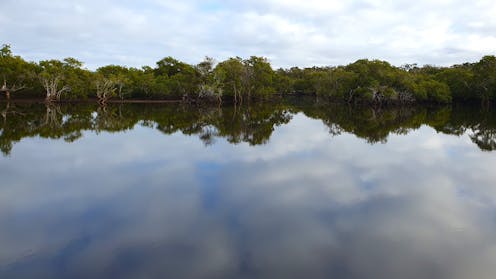
Rivers up and down the north coast of New South Wales have been hammered again, just three years after devastating floods hit the Northern Rivers and Hawkesbury-Nepean Valley.
The events of 2022 sparked our latest research into the estuaries of NSW. These special places, where the rivers meet the sea, are teeming with life. Now – for the first time – we can reveal what lives where, in maps based on tell-tale traces of DNA.
Together with Indigenous rangers from six language groups, we surveyed 34 estuaries to capture evidence of living species – everything from microbes to fish, plants and mammals.
We were surprised to find platypus in places they had not been seen for years. We also identified elusive native species such antechinus and rakali, and 68 invasive or pest species including cane toads – spreading further south than previously thought.
This catalogue of species in NSW estuaries can be used by authorities and scientists – but anyone, anywhere can explore the map online.
Mapping life in NSW estuaries (Southern Cross University)Estuaries are vital, yet many questions remain
First Nations Peoples have long recognised the vital importance of the areas where land meets sea. Estuaries are have provided food resources for thousand of years and are home to important historical and contemporary cultural sites.
Today, 87% of Australians live within 50km of the sea. This makes estuaries one of the most intensively used areas of NSW. They provide critical habitats such as seagrass or mangroves, host high biodiversity, and have a high social value as places for recreational activities such as fishing.
Yet research into the species that live in estuaries is mostly limited to large estuaries such as Sydney Harbour, Botany Bay or Port Stephens.
NSW has excellent water quality monitoring programs, and vital habitats such as seagrass meadows have been the subject of long-term mapping programs. However, large gaps remain.
Understanding how biodiversity in estuaries changes over time, especially in response to extreme events, can help governments design appropriate responses to maintain or restore ecosystem health. But with nearly 200 estuaries in NSW, studying changes in biodiversity is not a simple task.

Our DNA detective work
Measuring salinity or oxygen levels in water is relatively straightforward, using equipment on the shoreline or hanging off the side of a boat. Finding out what lives where is much more difficult. This where new genetic methods come in.

Life forms leave tell-tale traces of DNA in the environment. Animals may shed hair, skin or scales, as well as poo. Plants produce pollen and leaves that end up in the water.
We matched small snippets of DNA to find the species it belonged to – a bit like scanning a barcode in the supermarket.
This technique allows us to analyse the full extent of biodiversity in estuaries. This includes not just fish, but also species at the base of the food chain such as microscopic algae – all from a few litres of water.
Indigenous rangers live and work on Country and know it well. We formed alliances with six groups of Indigenous rangers through the state’s Cultural Restoration Program:
- Batemans Bay Local Aboriginal Land Council (Walbunja)
- Bega Local Aboriginal Land Council
- Jali Local Aboriginal Land Council
- Jerinja Local Aboriginal Land Council
- LaPeruse Local Aboriginal Land Council (Gamay)
- Yaegl Wadyarr Gargle Land and Sea Contractors.
Our research builds on the different strengths and interests of local groups. The rangers worked with us all the way through, from the design phase to selecting sampling sites of ecological or cultural significance, helping to conduct surveys and working with scientists to interpret the results.
Trained in environmental DNA methods, rangers can monitor their Country independently in future.
What did we find?
We now have the largest publicly available biodiversity dataset for NSW estuaries. It covers everything from single-celled algae at the base of the food chain, to top predators such as great white sharks and white-bellied sea eagles.
Anyone can explore the interactive map to find out what lives in the estuaries nearby or further afield.
Rangers detected platypus in the lower reaches of Bega River, in places where they were thought to have disappeared. Totemic species such as dolphins were widespread across the state, including urban estuaries such as Botany Bay in Sydney, while mullet and bream were found shifting between the mouth and further upriver. Cane toads were found at Sandon River in the Northern Rivers region, and most recently in Coffs Harbour, much further south than expected.
These results mean a lot to local Indigenous mobs. They can integrate contemporary scientific results into traditional ecological knowledge and use both approaches to better understand how estuaries respond to extreme weather events or activities such as habitat restoration.
We also recently returned to sample sites following Tropical Cyclone Alfred and the extreme rainfall events in March. Being able to compare the data to a well-established baseline survey means we will be able to see which species were worst affected.
Knowledge sharing for the future
Two-way knowledge sharing between Indigenous knowledge holders and research scientists is improving our understanding of estuarine health.
The results of this project will help Indigenous groups to care for their Country while also improving scientific knowledge to better respond to environmental impacts such as floods for decades to come.
 The project was a team effort. L to R: Kait Harris (NSW Departments of Primary Industries and Regional Development), Maarten De Brauwer (Southern Cross University), Shaun Laurie (Yaegl Rangers), and Amos Ferguson (Yaegl Rangers).
Southern Cross University
The project was a team effort. L to R: Kait Harris (NSW Departments of Primary Industries and Regional Development), Maarten De Brauwer (Southern Cross University), Shaun Laurie (Yaegl Rangers), and Amos Ferguson (Yaegl Rangers).
Southern Cross University
The authors wish to acknowledge this program was delivered collaboration with and on behalf of the Departments of Primary Industries and Regional Development (DPIRD), Fisheries & Forestry, with funding provided by the Australian and NSW governments under Disaster Recovery Funding Arrangements as part of the NSW Estuary Asset Protection program (NEAP).


